Museum / Rooms / History of taxation in the ancient world
Room · 7 chapters
History of taxation in the ancient world
In addition to being a source of government revenue, taxation was one of the most lucrative businesses in history
What is tax?
Tax (from the Latin “taxo”, “rate”) can be defined as a financial charge or other levy imposed upon taxpayer by state to fund various public expenditures. Basically, taxes may be classified as direct and indirect. Direct taxes (income, inheritance, estate and gift taxes…) are imposed on individual measured by income or net worth. Indirect taxes in return were levied on commodity, that is, on production or consumption of goods and services or transactions, including imports and exports.
Who invented taxes?
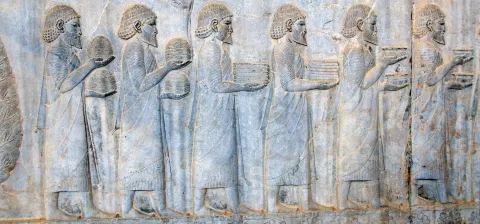
The first systematic taxes developed in the ancient Mesopotamia, Egypt and China to maintain bureaucratic and military systems and extensive public works. These taxes were actually seen as a kind of retribution for the use of ruler’s land and its resources with the purpose of obtaining personal economic profit. For centuries, the only form of taxation represented direct taxes paid in the form of grain and labor for state projects. A special category of early taxes was also a tribute imposed on conquered lands.
Tax-collectors
The tax collectors were one of the richest and most resented groups in history. The government usually farmed the right on collection of taxes to these private contractors for a specific period of time in exchange for an advanced payment to the state. Therefore, tax farmers reaped profits both from overpayment and through lending money at usurious rates to people to pay taxes.
Tax farming was the realm of corruption and embezzlements throughout the history. Already the tablets dating from ancient Mesopotamia reveal that people had a great fear of tax-collectors: “You can have a Lord, you can have a King, but the man to fear is the tax collector”.
Taxes in ancient Mesopotamia
The oldest tax records are found in Mesopotamia in the ancient city-state of Lagash in modern day Iraq, a civilization which dates from 6000 years ago. The applied tax system was called “balla” or “rotation” and it involved conducting assessment and taxing of one area of the city-state each month. Moreover, from the need to record taxes more efficiently the ancient Mesopotamians around 3500 BC invented the oldest writing system in history – the cuneiform script.
History of tax evasion is as old as history of taxes itself. One letter preserved from 1900 BC Mesopotamia testified about the consequences of tax evasion. "Irra's son sent smuggled goods to Pushuken but his smuggled goods were intercepted. The Palace then threw Pushuken in jail! The guards are strong...please don't smuggle anything else!"
Taxes in ancient Egypt
It is known that already in the 3rd millennium BC the Pharaoh traveled the country in the ceremony named “Following of Horus” to assess and collect revenues owed to him. Some practices of the ancient Egyptians have survived until the present day. For example, the word philanthropy derives from the Egyptian policy of remitting taxes, called “philanthropa”. Also, the people who were unable to pay taxes could find a shelter from the scribe’s claims in temples. This right of “asylia”, as it was called, survived to this day in diplomatic relations between nations.
In ancient Egypt, a tax was placed on a variety of things and activities such as cooking oil. To make sure that households weren’t avoiding the tax by reusing oil, special agents were employed to check oil consumption in households.
Taxes in China
Chinese tax system was greatly influenced by Confucius (551 – 479 BC) who founded a philosophy of fair taxation. His teachings of low taxes set up at 10 percent were followed by many wise Chinese rulers who in turn contributed to long periods of prosperity and stability in history of China. Although some rulers in Chinese history occasionally imposed taxes up to 50 percent there were also enlightened rulers who imposed very low taxes, only 3 percent.
Taxes in ancient Greece
In the ancient Greece, the word “freedom” actually marked the person’s tax status. The obligation to pay direct tax was regarded by Greeks as the difference between freedom and tyranny. The only justified direct tax was “eisphora” or war time emergency tax which was abolished immediately after the peace and in the case of victory it was restored from the war booty. To compensate lack of funds without having to introduce the payment of direct taxes or increasing of existing, the Greeks introduced liturgies – the obligation imposed on wealthy to share their wealth with the community by construction of bridges, public plays, athletic games, military equipment and extremely expensive warships.
Although the Greeks managed to assert exemption from payment of direct taxes, this privilege similarly as democracy referred only to Athenian citizens, that is, to persons of whom both parents were born in Athens.
Roman taxes
The Romans also applied the strategy of not imposing direct taxation to its indigenous population which remained a guiding principle of its taxation policy for centuries. From the 2nd century BC the conquered Roman provinces carried all the load of financing the Rome and the Empire. The system of Roman tax collection for long time relied on professional and unscrupulous tax collectors, called “publicani”. The Roman tax system reached its peak during the reign of Emperor Augustus (r. 31 BC- 14 AD), after which began its gradual decline. Each succeeding emperor faced the challenge of meeting the growing costs of administration by introducing various schemes to revise the tax structure while the empire went downward path. Although not predominate reason, the tax evasion practiced by its subjects played a significant role in collapse of Roman civilization in 476.
In a variety of indirect taxes, the strangest is the tax on urine introduced by Emperor Vespasian in the 1st century to all public toilets in Rome. When his son, Titus, complained about the disgusting nature of the tax, Vespasian showed him a gold coin and asked him if he could smell anything. The phrase “Pecunia non olet” or “Money does not stink” emerged from this anecdote and it is still used today to say that the value of money is not tainted by its origin.
Chapters
Ancient civilizations
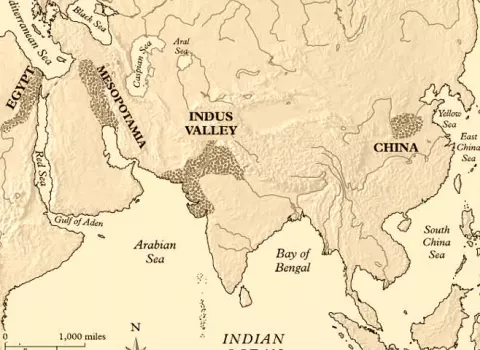
The first great civilizations in world history have developed about 5000 years ago in the fertile river valleys of ancient Mesopotamia, Egypt and China. Although territorially remote, these cultures shared some common features in the terms of government, society, and economy.
According to organization they were theocratic empires – its rulers possessed a strong political power which is believed to originate from the gods themselves, and were regarded the owners of all lands and people in the kingdom. In their rule over the Earth they relied on large bureaucratic system of literate civil servants and on the privileged class of noblemen and priests.
Since the new, centralized states required funds for maintenance of its large administrative and military apparatus, and for extensive public works, innovation in the form of taxation is introduced to meet these needs. The taxation of subjects was actually seen as a kind of retribution for the use of ruler’s land and its resources with the purpose of obtaining personal economic profit. Therefore, the first systematic tax laws in history emerged and can be traced right from the period of the ancient Mesopotamia, Egypt and China.
Society, which was strictly hierarchically organized, was basically divided into two groups – a privileged class which owned most of lands, wealth and power, and a large taxable population. Since the economy of these early civilizations was predominantly agrarian and lacked the coins for a long time, taxes were paid in form of goods and services.
The earliest levies were imposed on land, a main source of wealth, and were paid in land products or items of production. Corvèe or labour service tax could take a form of military service or work on construction projects. These direct taxes for centuries represented the only form of taxation. Later, various other forms of taxes, such as levies on property, inheritance, on the sale of goods as well as customs duties were introduced. A special category of early taxes was also a tribute, a payment from a subordinate polity to a superior “in acknowledgment of submission or as the price of peace, security and protection”.
Mesopotamia
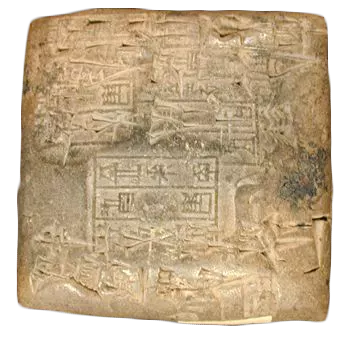
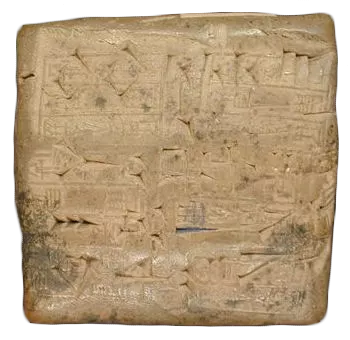
This clay tablet was written in month twelve of the first year of the reign of Ibbi-Sin, 2028 BCE. It records the delivery to some central storehouse of bales of bundled reeds, some of which were then set aside for tax payments.
Some of the earliest written documents in world history - Mesopotamian cuneiform clay tablets - were of an economic nature, and were actually the tax records. According to some theories, the invention of writing system was actually motivated by the need to record taxes more effectively.
The tax records dating from 6,000 years ago from ancient city-state Lagash (Iraq) give us valuable insight in the tax practice of the time. The applied tax system was called “balla” or “rotation” and it involved conducting assessment and taxing of one area of the city-state each month. According to available sources, the taxes were very low but could reach a rate of 10 percent of all gods in a time of crisis or war.
Due to predominately agricultural nature of economy the earliest form of taxation was “tithe”, a collection of a percentage of each landholder’s crops (such as grain, dates, fish, wool, livestock…) or a percentage of its worth in silver. Services were provided through already mentioned corvèe system. Merchants were also included and obliged to pay special taxes on occasions when they shipped or received goods, passed through cities along trade routes or crossed rivers. During the Old Assyrian period (2025-1392 BC), merchants who ran business in Anatolia were obliged to pay taxes to the city of Assur on leaving with their export goods (e.g. 10 percent on the textiles), as well as after arriving at Kanesh for the maintenance of the trade colony. In the Neo-Assyrian Empire (911-612 BC), taxable services extended to any lucrative trade. The rates were variable and differed by type of goods.
This clay tablet was written in month twelve of the first year of the reign of Ibbi-Sin, 2028 BCE. It records the delivery to some central storehouse of bales of bundled reeds, some of which were then set aside for tax payments.
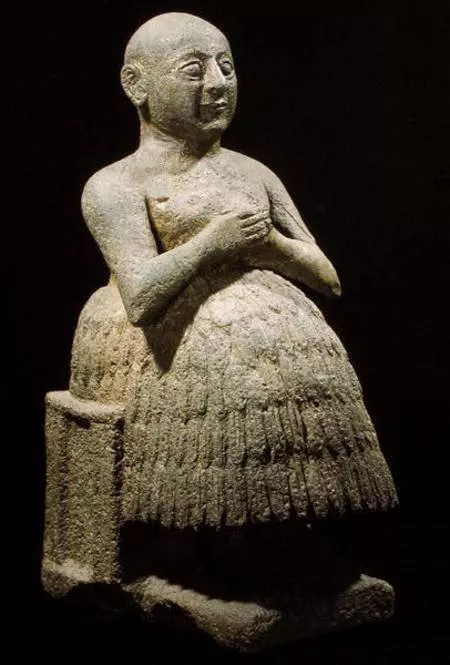
Large and centralized empires required adequate system for assessment and collection of taxes. In ancient Mesopotamia, a large body of civil servants (scribes) was employed and many were in charge of travelling around the country and collecting royal revenues. Rulers, often in need of a quick source of cash, practiced to sell the right to contractors, the highest private bidder who paid to state in advance. These men frequently amassed a fortune through these ventures as they practiced extortion of a far greater sum from taxpayers than they paid themselves. The ancient Mesopotamian tablets reveal that the ancient Sumerians had a great fear of them, much higher than of rulers. There is a proverb preserved about taxes on other clay tablets which reads: “You can have a Lord, you can have a King, but the man to fear is the tax collector”.
Naturally, the history of tax avoidance is as old as the history of taxation, and these two phenomena can be traced comparatively. One such case is evidenced in Mesopotamian history in a letter from 1900 BC sent by master to his employee, which also testifies to the existence of legal measures for such behavior: "Irra's son sent smuggled goods to Pushuken but his smuggled goods were intercepted. The Palace then threw Pushuken in jail! The guards are strong...please don't smuggle anything else!"
Egypt
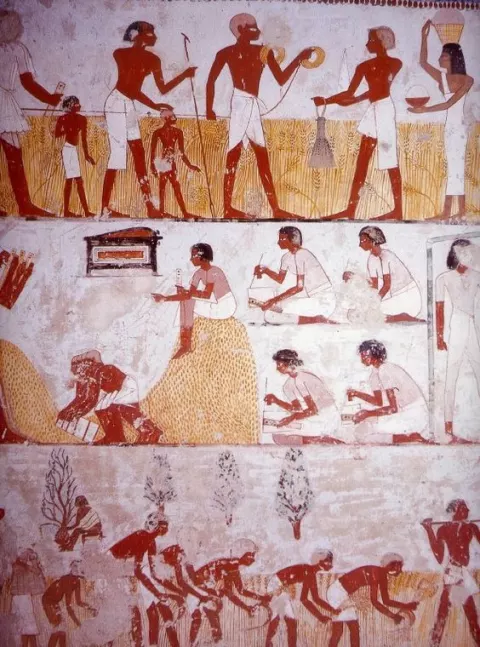
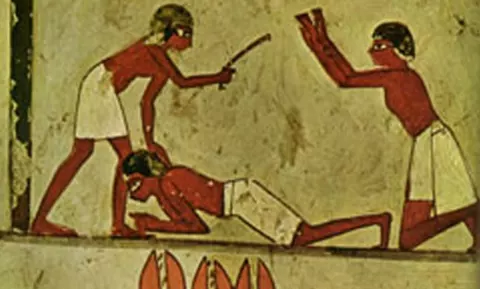
Scene of the grain harvest, accounting and tax collecting.
The ancient Egypt developed one of the simplest and the most effective systems of taxation which greatly contributed to its political and economic strength. The oldest mention of its existence can be traced as far as King Scorpion’s First Empire in southern Egypt between 3300 and 3200 BC. Around the time of the first dynasty of the Old Kingdom (3000-2800 BC) there is evidence of ceremony named “Following of Horus”, a biennial inspection, conducted by the pharaoh and his court with aim to assess and collect revenues owed to the ruler.
In the collection of taxes from his numerous subjects and their activities, pharaoh relied on the well-established network of tax collectors or scribes. Taxes were determined according to estimates of yield for that year and depended on the quality of land and anticipated flood level. Agriculture production was taxed at a heavy 20 percent. Excise taxes or taxes on specific goods such as beer or cooking oil were also levied. Sources mentions that scribes made regular inspections of household to check if wives were using free drippings instead of the taxed oil they were required to use. Foreign trade and transportation of merchandise were also subjugated to taxation.
Around 700 BC in Egypt originated the first gift and inheritance tax, and through the ancient Greeks the practice of taxing the value of inherited property has spread throughout the Mediterranean and the Middle East. A tax of 10 percent of the value was imposed on transfers of land. By 117 BC both personal and real property became subject to inheritance tax.
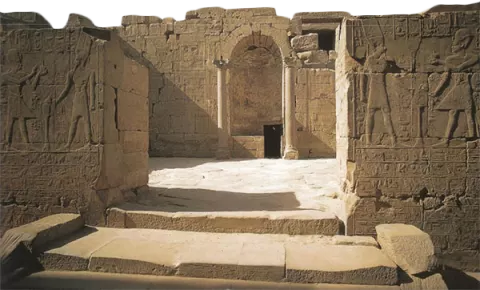
A taxpayer unable to meet his obligations to the state was brought before courts that immediately dispensed justice. Although the tax collectors were proverbially persistent and relentless in their claims, three thousand years long history was nevertheless filled with examples of humanity. One of them is the policy of remitting taxes, originally called “philanthropa” and from which our word “philanthropy” derives. Furthermore, the temples, which were generally exempted from taxes, provided a refugee where people could find shelter from the scribe’s claims. This right of “asylia”, as it was called, survived to this day in diplomatic relations between nations.
Even the Egyptian rulers themselves wanted to protect subjects and their source of income. Thus they established a control system by which the tax collectors were supervised and those found guilty for over charging taxpayers were sentenced by cutting of the nose and exile to a desolate part of Arabia. The ancient records mention a colony in Arabia inhabited by people with deformed faces.
China
The Chinese civilization is one of the oldest in world history. Their rulers, regarded as the Sons of Heaven, possessed a sort of divine right, but were in the same time bounded by the laws of Heaven and could lose their mandate if they ruled oppressively.
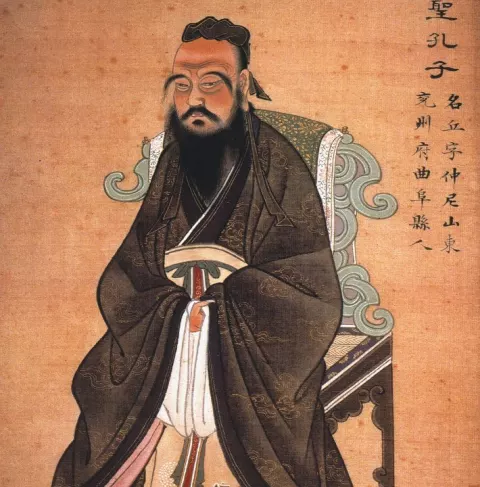
The oppressive rule usually meant abusive and ruthless taxation which departed from Confucian ideal. Confucius (551 – 479 BC), a Chinese philosopher, is credited with founding a philosophy of taxation which was based on the principles of tax justice and lasted in Chinese culture over two thousand years. His ideal tax system was set at 10 percent. Even Genghis Khan (1162-1227) demanded only a 10 percent tax when he ravaged Russia and showed respect to the Confucian ideal.
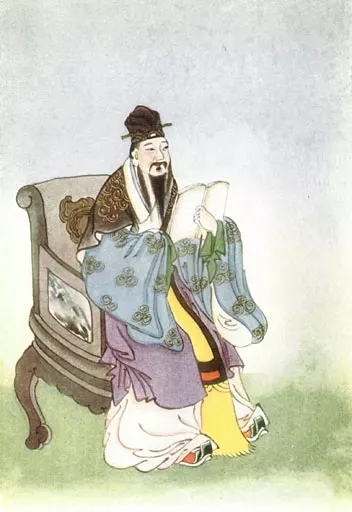
The book “The sayings of Mencius” written by another famous sage, Mencius or Meng-tse (c. 372-289 BC) contains many tax stories that explains the success of Confucian tax philosophy. In one of his teachings, his student asked him what the highest caliber of rulers should do about taxes:
• As for business, tax the locale, but not the gross.
• If already subject to a land tax, do not tax production, then all the merchants of the world will be pleased to have stocks in your markets.
• If at the ports there is inspection but no taxation, all travelers in the world will be so pleased that they will want to travel in your country.
• In the case of farm workers, if you do not tax them, all the farm workers in the world will be pleased to work your fields.
• If workers' dwellings are not subject to a head tax, everybody in the world will be pleased enough to become your subject.
However, Mencius also introduced some changes in the Confucian ideal of taxation by inventing first the Well-Field System, and later The Equal Field System of landownership and distribution. In either case the single farmer or owner paid a 10 percent tax on the crop itself.
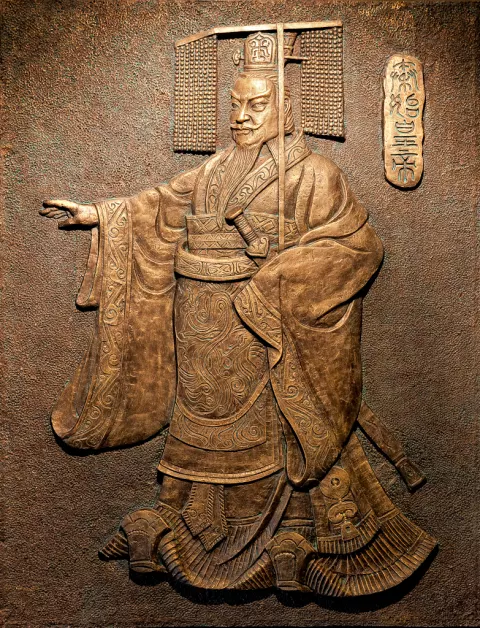
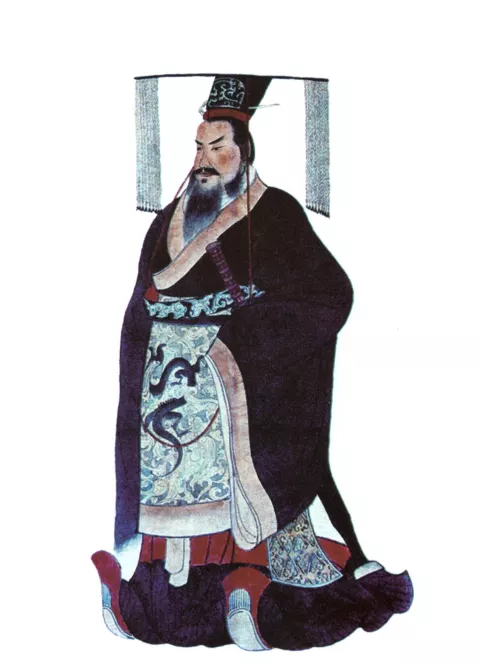
Teachings of Confucius and Mencius were not always suitable to the great imperial visions of some rulers and were often ignored. Some Chinese emperors, such as the famous Shih-Huang-Ti (259-210 BC), a major builder of the Great Wall increased taxes from 10 to over 50 percent in order to finance his great projects. But there were also enlightened rulers, such as Ching-Ti (156-141 BC) who imposed very low taxes, only 3 percent embodying the other extreme in Chinese economic history.
The Confucian ideal of low taxes was deeply rooted in the religious teachings and followed by many wise rulers who in turn created long periods of prosperity and stability in history of Chinese civilization.
Ancient Greece
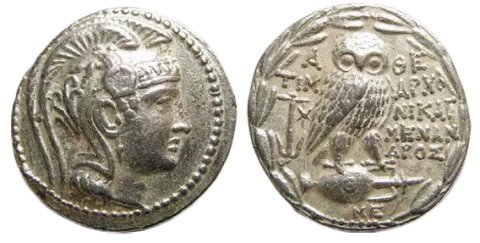
Athens, ca. 136 to 136 BC. Silver new style tetradrachm.
It is generally believed that the foundation of the famous Greek cultural as well as material prosperity and liberty have rested on good laws, sound money, and low taxes. To the ancient Athenians the tax system was the best indicator of the liberty of any society. The word “freedom” in those times actually denoted the person’s tax status. Taxes were in ancient Greece collected in the form of money.
To Greek democratic spirits, direct taxes imposed in number of Greek city-states that were ruled by tyrants, were regarded as extremely offensive and humiliating. They were contrary to their concept of freedom. Direct taxes consisted of poll tax and 10 percent harvest tax from tribute paying vassal city-states.
Therefore, for the ancient Greek the main feature of liberty were actually the indirect taxes. Indirect taxes, imposed on some commercial activities such as sale, import, or use of a public facility such as a road, a bridge, a sea lane or a harbor (2%), were considered justified as they were imposed because of necessity to cover the costs of its maintenance. To this category also belonged taxes on auctions, slaves and real estate sales.
The only real tax which fell on citizens and was based on their personal income was “eisphora” or Athenian war time emergency tax. But even here the Greeks managed to show their wit. This tax was required only during the war time and was abolished immediately when the peace was restored. That made the Greeks one of the few people in history who successfully limited extraordinary taxes on situations that caused them. Moreover, if the war was successful and booty was acquired, it was used for repayment, that is, for return of “eisphora”.
Although the ancient Greeks provided great efforts to put taxation in the frame of ethics, their renowned tax equity similar to a democracy remained exclusive. The best example for this assertion is the status of foreigners in Athens. The exemption of taxes was enjoyed only by the Athenian citizens, that is, persons of whom both parents were born in Athens. The large group of foreign citizens who ran a business in Athens acted as the source of state revenues. Denoted as “metics”, these foreign merchants and workers were subjugated to a monthly “poll” (head) tax called a “metoikion”. It consisted of one drachma for men and a half drachma for women. Also, they were not allowed to own the land which was tax exempted as well. Interestingly, some professions such as prostitution, soothsaying and medicine were also subjugated to direct taxation.
In order to prevent abuses, the tax evaders in ancient Greece were taxed at ten times the amount of the evaded tax, and foreigners were exposed to additional penalty of confiscation. A reward of 50% of the penalty was intended for informers in order to encourage their enforcement and efficiency.
Since direct taxes were paid only by foreign residents, it was necessary to find another source of incomes without imposing heavy taxes or introducing direct taxes. Greek genius derived from the fact that they actually succeeded in these efforts through two methods – liturgies and tax farming.
Namely, the wealthiest and leading citizens of Athens, both native and aliens, motivated by tradition and strong public sentiments made large voluntary donations to provide the community with all necessities. Public improvements and needs such as construction of bridge, public plays, athletic games, military equipment and extremely expensive warships were funded by rich men who were competing with one another for honor of liturgist. Interestingly, the sources reveal that many liturgists actually donated three or four times what was expected of them. In turn, they were simply honored and highly esteemed in community.
Another applied method of fundraising was tax farming. The state auctioned off, that is, farmed at public auctions the right to collect a certain tax, such as harbor tax, an inn or hotel tax, or a sales tax to private contractors for a specific period of time and in exchange for an advanced payment to the state.
The old saying: “Rome conquered Greece, but Greece conquered Rome” can be applied to the field of taxation as well, as the ancient Romans adopted and used some aspects of Greek taxation for centuries.
Ancient Rome
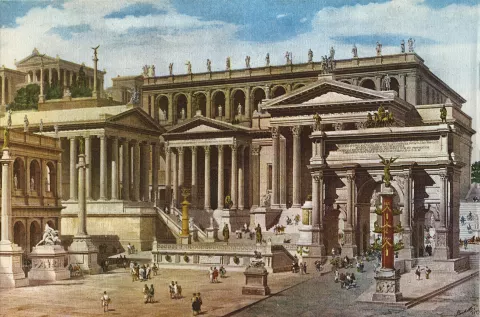
The Greek practice of not imposing direct taxation to its indigenous population was a guiding principle of the Roman taxation policy for centuries. During the Roman Republic (509-27 BC) the only form of direct tax imposed on its citizens was a war tax, since the financing of armies was the most expensive operation in every society and required additional support. It was abolished in the 2nd century BC as the newly conquered provinces became charged to carry the burden of providing for military legions. The total combined taxes paid by Roman citizens were modest 1 percent of the total value of their property and wealth, including real estate, animals, slaves and other possessions, and could rise to 3 percent in war time.
Since the state still needed some revenues, they were obtained through various indirect taxes. The most important were “portorium” and “vicesima manumissionis”. “Portorium” or harbor taxes were a form of customs duty charged on imports and exports at varying rates. This rate was higher for luxury items, and lower for basic necessities. “Vicesima manumissionis” was, on the other hand, the 5 percent charge on liberation of slaves.
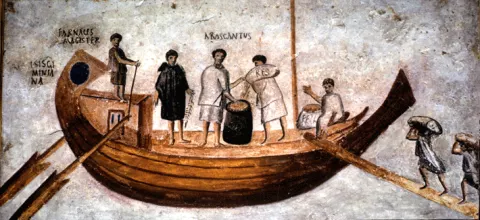
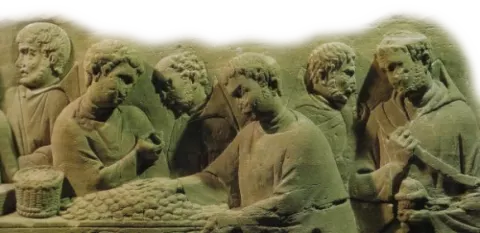
A 2nd- or 3rd-century A.D. fresco shows merchants loading grain.
The expansion and conquests in the 2nd century BC brought to the Roman state a considerable wealth in the form of booty, slaves and indemnities. The newly established Roman provinces became an object of taxation and the main source of revenues for the Roman treasury. Mines usually became a property of Rome and were often worked with slave labor. Iberia with its extensive gold and silver mines was a particularly lucrative asset for which Pliny the Elder noted: “no other part of the world has offered such a continuous production of gold for so many centuries”.
Contrary to practices of other empires in the past, the Roman usually did not introduce significant changes in the existing tax system. Provinces were obliged to provide direct and indirect taxes. “Tributum” was the main direct tax and could take two forms: a “stipendium” (an annual fixed amount paid, for example, by Spain and Africa) or “tithe”/ “decumae” which were a quota of harvested crops. Sicily and Egypt were known as main granaries of Rome.
To collect these taxes from provinces, the state relied on services of professional tax collectors, publicans or “publicani”, who would become one of the richest and most resented groups in Roman history. They worked either as private individuals or agents of tax-collecting companies, so-called “societates publicanorum” which were one of the first world’s corporations. At the public auctions organized by the state every few years publicans would bid for the right to collect taxes in particular provinces in exchange for an advanced payment to the state. A highly profitable enterprise, tax farming became the realm of corruption and malversation once they stepped on the field, since the taxes were usually collected beyond the official rate. “Where the publicans are, there is no respect for public law and no freedom for the provinces” wrote a contemporary Roman historian Livy. Their profits were additionally augmented by the practice to provide loans to the provincials in difficulties at usurious rate of 4% or more per month. With acquired wealth, publicans were able to dominate trade, banking and shipping activities of state. Although authorities were aware of the events, they were unable to prevent them because the state expanded to fast and there was no alternative way of collecting taxes.
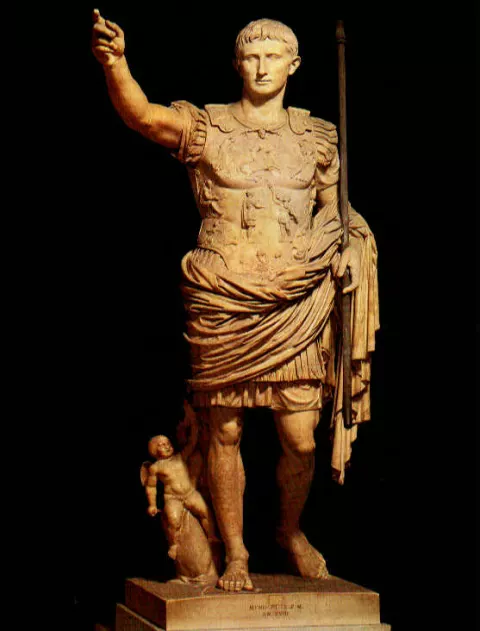
Beginning with the strong rule of Augustus (r. 31 BC- 14 AD), the first ruler of the Roman Empire (27 BC – 476 AD) and one of the most brilliant tax strategists of all time, the tax farming was put to the end. Although publicans continued to act as moneylenders and entrepreneurs, they were removed from the tax field and replaced by government officials called “conductores”.
Tax farming was replaced by more convenient and uniform method of direct taxation. Each province was required to pay a land tax (“tributum soli”) of around 1% (the rate was variable by province) and fixed poll tax (“tributum capitis”) levied on each adult. This procedure, in the other hand, required introduction of census, a register of citizens and the property of citizens for the purpose of taxation which was revised every five years. There were also numerous other taxes.
Under August Italy managed to preserve its privileged position and exemption of paying direct taxes although it was burdened with some additional indirect taxes. These were the 1 percent tax on sales at auction (“centesima rerum venalium”) and a 4 percent tax on the sale of slaves (“quinta et vicesima”). If we take into consideration that only the free port of Delos could handle as 10 000 slaves at a time, and Rhodes even more, it is obvious that taxes on slavery were a huge source of revenue for every government. A 5% tax on the manumission of slaves by Roman citizens continued unchanged. In the imperial period, the most important indirect taxes, “portoria” or customs duties were extended from simple harbor dues to the internal trade in the provinces, levied on goods transported along the major routes, and on goods crossing the boundaries of the Empire. Also, the 5 percent inheritance tax or “vicesima hereditatum” was introduced and applied throughout the empire to wealthy citizens lacking closely related heirs.
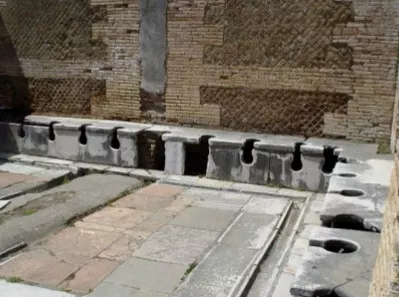
“Pax Romana” or two hundred years of peace and economic stability was the immediate consequence of the wise taxation and decentralization policy introduced by August. In that period one of the most bizarre taxes in general history was born. Since the urine was widely used in many industries, the emperor Vespasian in the 1st century introduced the tax on urine which was extended to all public toilets in Rome, which was taxed, collected and then sold. When his son, Titus, complained about the disgusting nature of the tax, Vespasian showed him a gold coin and asked him if he could smell anything. The phrase “Pecunia non olet” or “Money does not stink” emerged from this event and it is still used today to say that the value of money is not tainted by its origins.
In the period that followed, increased military expenditures for defense purposes and drastic reduction in the population due to the plagues led to the progressive tax increase. The crisis of the 3rd century was manifested, among other things, through devaluation of currency and inflation. Various taxes and measures were introduced and abolished in order to avoid collapse.
For example, in 212 AD Emperor Caracalla (198-217 AD) gave full citizenship to all male residents of the empire in order to enhance revenues by increasing the taxable base.With this move, for everyone in the empire became mandatory to pay inheritance tax. Diocletian (284-305 AD) left aside the worthless denarius and turned to collection of taxes in commodities that state needed, such as wheat, barley, wine, oil and clothing. After 500 years of immunity Italy saw the introduction of direct taxes. To enhance taxation in kind Diocletian ordered a census, but the overtaxed farmers tried to avoid paying of taxes by moving away to a new districts were they were not on the current roll. At the time it was said that “a man was free if his name was not on the tax rolls”. In order to protect his revenues, Diocletian issued regulations that destroyed the 1000 years tradition of freedom of movement in the Roman state and nailed the farmers to land for centuries. During Constantine (306-337 AD) the first income tax on commerce (paid every 4 years on the value of the commercial operations) was introduced. He is also remembered for instituting the use of a “spacious and airy prison as a place of confinement”, which is the first record of imprisonment for tax evasion.
These and other measures could only delay, but not avoid the inevitable. There are many reasons that contributed to complex topic of the fall of the Western Roman Empire in 476. Although not predominate reason, the tax evasion practiced by its impoverished subjects as well as by the wealthiest one, played a significant role in the succumb of Roman civilization.
The early medieval kingdoms of Europe that were founded after the 5th century were generally at a lower level of development and did not have the expertise to operate the Roman revenue system. As a consequence, by the 8th century, the most Roman taxes disappeared in the West.
Taxes
History of taxation in Antiquity
Taxes
Taxes may have developed from the obligation of the prehistoric man to contribute to the community in which he lived. The purpose of introducing the taxes was to finance government operations and meet the social needs. Tax (from the Latin “taxo”, “rate”) can be defined as a financial charge or other levy imposed upon taxpayer, which can be an individual or legal entity, by state or its equivalent to fund various public expenditures. Basically, taxes may be classified as direct (income, inheritance, estate and gift taxes…) and indirect (sales and excise taxes, customs or import duties…). Direct taxes are imposed on individual on an individual’s ability to pay as measured by income or net worth. Indirect taxes in return were levied on commodity, that is, on production on consumption of goods and services or transactions, including imports and exports.
Present almost from the very beginning of the human livelihood, taxes are old as history of civilization itself. Their nature and significance in creation of present day world illuminates the often quoted statement “In this world, nothing can be said to be certain, except death and taxes” attributed to Benjamin Franklin.
Except of being mark of sophistication of each society, taxes were also hidden driving force of civilizations and their impact on overall political and economic development throughout the history is considered invaluable.