Museum / Rooms / History of accounting methods and bookkeeping
Room · 6 chapters
History of accounting methods and bookkeeping
Often called the “language of business” accounting is as old as the history of business itself.
What is accounting?
Simply speaking, accounting is a system for recording, managing and summarizing business activities. The use of accounting, on the one hand, facilitated the management of state affairs, while on the other, it fostered development of business conducted by government and private entrepreneurs as it purpose was to protect all parties involved in business transactions. In the course of history, the accounting methods would gradually develop from its rudiment ancient forms into the sophisticated forms which are in use today.
Token accounting
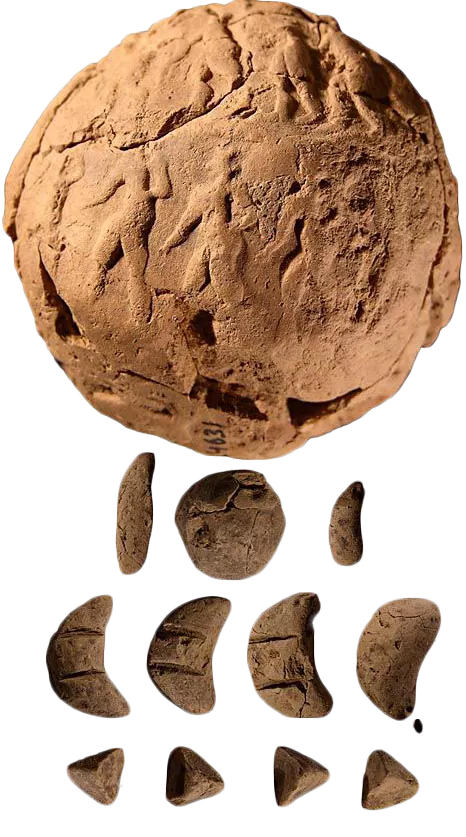
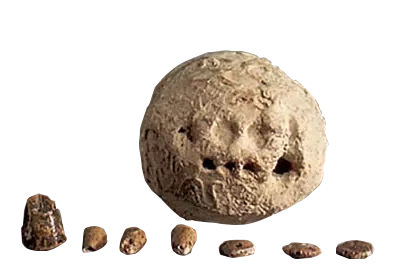
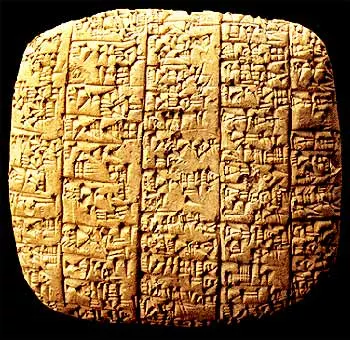
The emergence of accounting dates back to the first highly developed civilizations of ancient Mesopotamia, Egypt, and China. The origin of recordkeeping system represents the invention of token accounting in Mesopotamia. The conceptual origin of accounting system represents hollow clay balls called “bullae” in which tokens that symbolized various units of merchandise was stored. The further simplification of this practice led to invention of famous clay tablets on which tokens were represented by simple markings and imprinted with a reed stylus.
The need to record transactions more effectively led to the invention of writing system around 3500 BC in Mesopotamia.
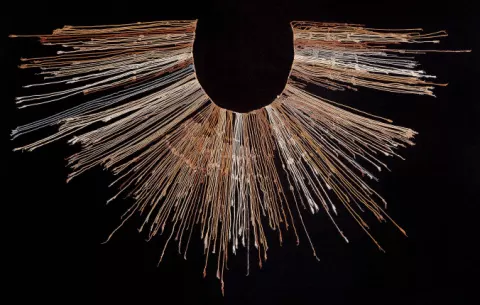
Among the earliest records of economic exchange most likely were scratches on stones and bones of prehistoric times, and knots tied in a string or rope as it was used by the Incas in South America.
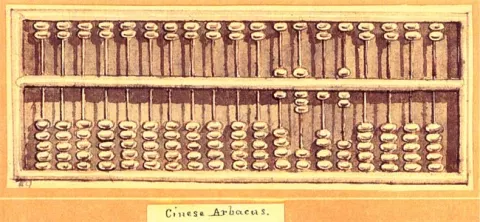
Chinese Invention of paper and abacus additionally improved the accounting methods of China, as well as of the countries where the innovations spread.
Scribes – the first accountants in history
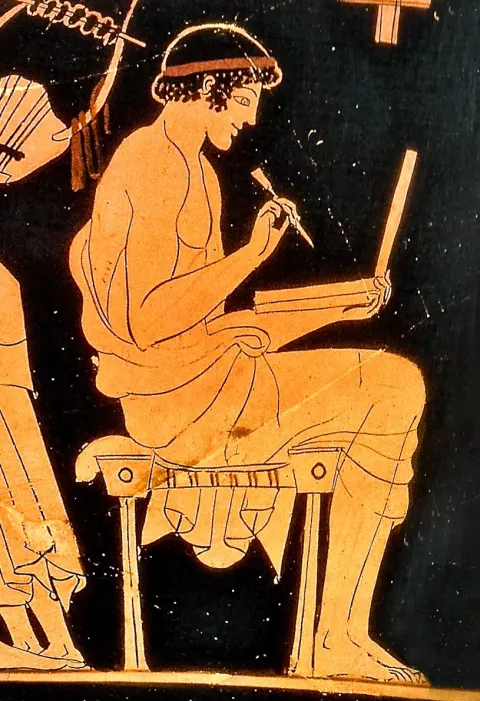
Since scribes had knowledge both of writing and law, they were the first educated accountants in history. Scribes of ancient Mesopotamia needed to memorize around 2,000 signs. Hundreds of scribes worked in the service of state palaces, religious temples and private firms, running their financial affairs.
Sophisticated Antiquty
The ancient Greeks and Romans made accounting techniques more sophisticated. The most important contribution to accounting is attributed to the ancient Greeks who invented coins (the 7th century BC), perfected the alphabet and introduced banking. Accounting transactions began to be recorded in ancient money rather than in weights and measures as was previously the case.
In ancient Rome, government and banking accounts grew out of records kept by the heads of families (pater familiae) ─ daybooks or “adversaria” and cashbooks or a “codex accepti et expensi”─ on the basis of which the family’s taxes and civil rights were determined. The original contribution of ancient Romans to accounting practice was employment of the Roman numerals. They also developed the primitive income statement, balance sheet and government's annual budget.
By the 4th century BC the accounting profession was firmly established in ancient Greece and the accountants were prominent profession in Greek society.
Medieval accounting
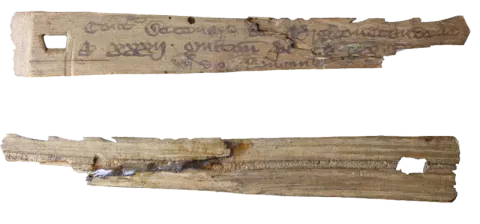
Medieval accounting is considered a direct development of Roman accounting traditions. The business transactions were recorded by using “tally”, a wooden stick with notches denoting various sums of goods or money. In transaction, the tally was split lengthwise down the middle and the handle remained with one half of the tally. The longer piece (the stock) was kept as a receipt by the creditor and the shorter (the foil) was kept by the debtor.
Before the invention of advanced double-entry bookkeeping method, the accounting system relied on a single-entry bookkeeping records which recorded flow of goods, but did not measure profit and loss, and made concealment of fraud easy.
Renaissance
The major changes to the field of accounting were introduced during the period of Renaissance. The rise of the international trade beginning from the 12th century encouraged the Italian states that dominated commerce to develop more advanced double-entry bookkeeping that better suited new business challenges. It allowed the businessmen to classify, record and cross-check their accounts, as well as to calculate their profits what gave them an insight to what they owned and how well their business was doing. Introduction of the Arabic numerals additionally simplified calculations and positively contributed to accounting methods.
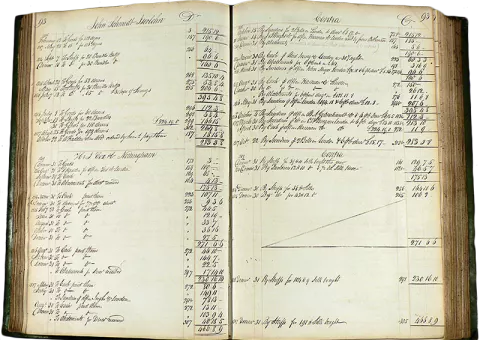
The principle of double-entry bookkeeping was simple – each transaction should be recorded twice – as a debit (left side) and a credit (right side). The total credits must equal the total debits.
Father of Modern Accounting
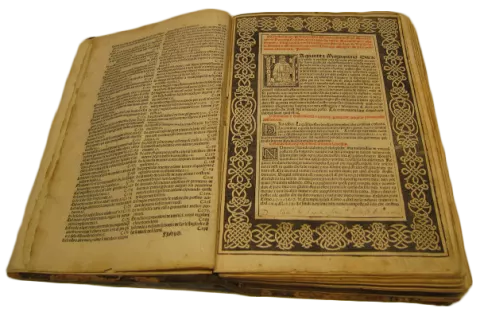
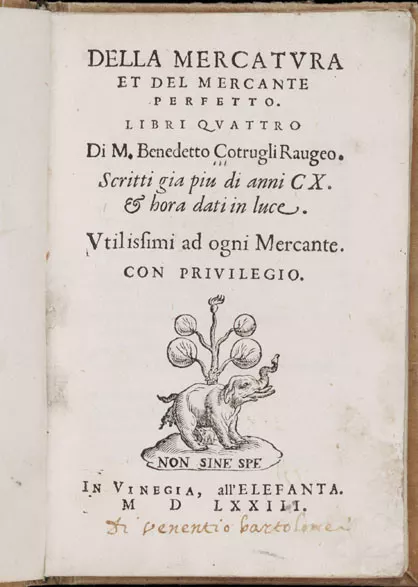
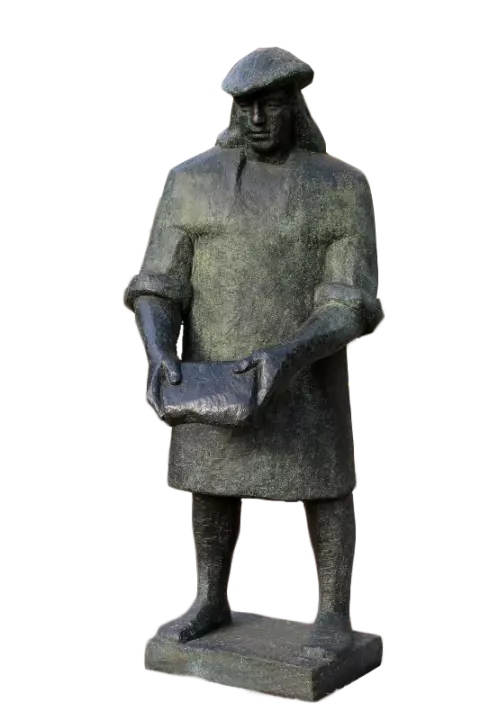
Although the double-entry bookkeeping system was in use for centuries, it was Benedetto Cotrugli, the 15th century Ragusan merchant, diplomat and humanist who left the first description of this method. His “Art of Trade” written in 1458 is the oldest known book on entrepreneurship and double-entry bookkeeping. The basics of bookkeeping methods described and preserved by Cotrugli five hundred years ago were little changed since then and form a vital part of accounting practice to this day.
Accounting basics are also mentioned in religious texts such as the Bible and the Qur’an.
Chapters
- Introduction
- Rise of accounting
- Ancient Greece and Rome
- Medieval accounting
- Renaissance
- Benedetto Cotrugli - the Father of Modern Accounting
Introduction
Bulla-envelope with 11 plain and complex tokens inside. Near East, c. 3700-3200 BC.
Simply speaking, accounting is a system for recording, managing and summarizing business activities. It is defined as an approach to “confirming, measuring and passing on economic information and a process for enabling information users to judge and make strategic decisions on the basis of it”.
The emergence of accounting dates back to the 4th millennium BC and first highly developed civilizations of ancient Mesopotamia, Egypt, and China as a reflection of their advanced economic and social systems. The use of accounting, on the one hand, facilitated the management of state affairs such as agricultural production, commerce, organization of labor, and collection of taxes which were all of vital importance for smooth functioning of state. On the other hand, accounting fostered development of business conducted by government and private entrepreneurs as it purpose was to protect all parties involved in business transactions.
Often called the “language of business” accounting is as old as the history of business itself. In the course of history, the accounting methods would gradually develop from its rudiment ancient forms into the sophisticated forms which are in use today.
Rise of accounting
prehistoric
According to archeological remains, a kind of primitive accounting forms might be used already in prehistoric times. Scratches on stones and bones, some of which date back to 75000 BC, could represent the records of economic exchange. Knots tied in a string or rope were in all probability among the earliest accounting tools. The quipu system used by the Incas in South America is a more elaborate version of this system.
mesopotamian
The origin of recordkeeping system represents the invention of token accounting in Mesopotamia. Around 3500 BC the tokens, that symbolized various unit of merchandise, began to be stored in hollow clay balls called “bullae”. The “bullae” had on its surface stamped seals of business parties involved in financial transaction. According to historians, this practice was the conceptual origin of our modern accounting system. The further simplification of this practice led to invention of famous clay tablets on which tokens’ shapes were simply draw on the tablets with the stylus. This cuneiform (from the Latin word cuneus for “wedge”) script developed around 3500 BC is the oldest system of writing. After sunbaking the clay tablets were stored in archives of temples or private businessmen. Tablets had all features of a modern account ─ nature of objects being transacted, names of the parties to the contract, quantities of goods and their equivalent value in other goods. The Hammurabi Code of the 18th century BC contains some of the earliest notions of accounting and management.
chinese and egyptian
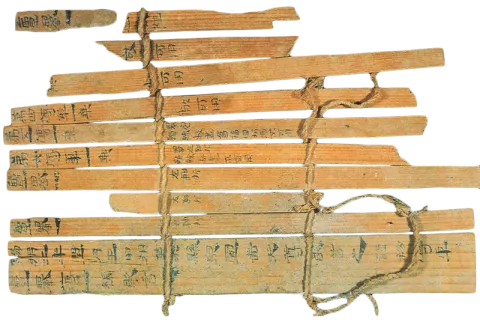
The first Chinese accounting books were in the form of bamboo slips or wood pieces bound together with marked characters on them. Invention of paper and abacus contributed to the improvement of the accounting methods both in China and the countries where the innovations spread.
In ancient Egypt the extensive records regarding the royal tax revenues and other economic activities were kept on papyrus scroll which is invented as early as 4000 BC. Egyptians accounts had all the features of universal accounts – name of the account, date, and amount. Also, receipts were distinguished from disbursements.
scribes
In these ancient societies, the service of accountants was performed by the scribes – the law acquainted literate elite of each society. Hundreds of them have worked in the service of state palaces, religious temples and private firms running their financial affairs. Although their educational training was obligatory, their honest and accurate performance was additionally motivated by royal audits.
It is important to note that the ancient accounting system relied on a single-entry bookkeeping records which recorded flow of goods, but did not measure profit and loss, and made concealment of fraud easy. This system remained in use until the 13th century.
Ancient Greece and Rome
greeks
The civilizations of Greece and Rome introduced the new levels of sophistication in record-keeping practices in governmental and financial sectors.
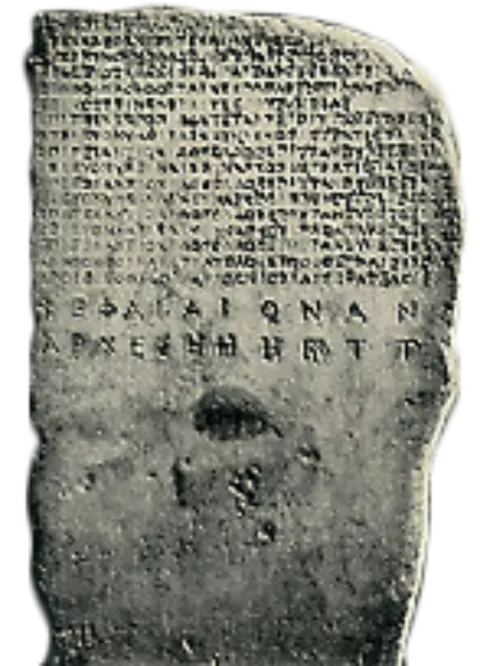
The most important contribution to accounting in antiquity is attributed to the ancient Greeks. They invented coins (the 7th century BC), perfected the Phoenician alphabet and introduced banking in ancient economy. From then on, accounting transactions began to be recorded in money rather than in weights and measures as was previously the case. By the 4th century BC the accounting profession was firmly established in ancient Greece and the accountants were prominent profession in Greek society. The complexity of the Greek banking led to the development of accounting control systems, which were the predecessors of auditing. It is known that already around 300 BC Athens had an audit court which was comprised of 10 “logists” who had the responsibility of controlling accounts. The ancient bankers used precise accounts in their business books which due to their liability were accepted as evidence on courts.
romans
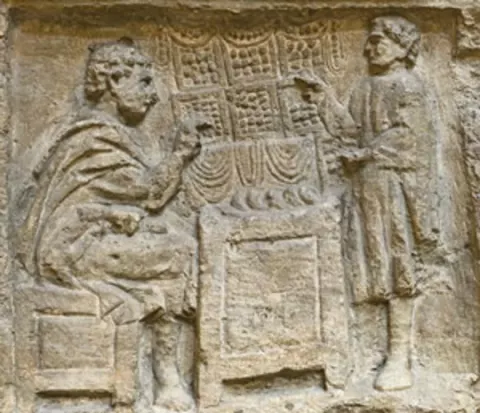
The ancient Romans took the best achievements of others such as ─ concepts of coinage, banks and alphabet from the Greeks, abacus from the Chinese, and the use of papyrus from the Egyptians ─ making them a part of their own accounting system. Their original contribution was development of numbers, the Roman numerals.
In ancient Rome, government and banking accounts grew out of records kept by the heads of families (pater familiae) which was considered an economic entity, on the basis of which were determined the family’s taxes and civil rights. For daily transactions they used daybooks or “adversaria”, which was the precursor to modem day ledgers and cashbook known as a “codex accepti et expensi” for monthly postings.
Another Roman contribution to field of accounting, except for Roman numerals was the development of the primitive income statement (profit and loss statement) and balance sheet (statement of financial position of a company at a particular time, such as the end of financial year, showing the company’s assets and liabilities). This system extended to management of state treasury. The Romans also introduced an annual budget.
The expansion of the Roman Empire was accompanied with the spread of the Roman financial and accounting practices laying the foundation for development of medieval accounting.
Medieval accounting
Medieval accounting is considered a direct development of Roman accounting traditions. In medieval Europe the business transactions were recorded by using “tally sticks” and abacus. The medieval abacus was a counting checkerboard that came in a variety of forms with counters of varying sizes, shapes and colors which represented different items and quantities to an operator. The business transactions were recorded by using “tally”, a wooden stick with notches denoting various sums of goods or money. In transaction, the tally was split lengthwise down the middle and the handle remained with one half of the tally. The longer piece (the stock) was kept as a receipt by the creditor and the shorter (the foil) kept by the debtor. The tallies were assignable, meaning creditors could transfer ownership of tally debts to third parties. In this connection tallies could circulate as money. They were widely used by monasteries, private persons and businessmen and even by governments.
Renaissance
The major changes were introduced to field of accounting during the period of Renaissance. There were several preconditions that needed to be fulfilled until then – the art of writing, arithmetic, private property, money as medium of exchange, credit transactions, commercial activity, and the owner’s capital investment.
The Crusade Wars launched at the end of the 11th century and lasting for two centuries have radically transformed the sleepy medieval world. These events increased the volume of business which again stimulated businessmen to coordinate diverse ideas in order to cope with it. Development of trade, banking and manufacturing, and cross-cultural exchange followed. The Italian city-states, already for centuries involved in business and long-distance trade will benefit the most. In order to make the most of this opportunity, these states revolutionized the economic world of the time by developing the double-entry bookkeeping method.
The principle of the new system was simple – each transaction should be recorded twice – as a debit (left side) and a credit (right side). The total credits must equal the total debits.
Therefore, the benefits of the double-entry bookkeeping method for business have been numerous. It allowed the businessmen to classify, record and cross-check their accounts, as well as to calculate their profits what gave them an insight to what they owned and how well their business was doing.
Benedetto Cotrugli - the Father of Modern Accounting
Although the double-entry bookkeeping system was in use for centuries, its first systematic description provided Benedetto Cotrugli, the 15th century merchant, diplomat and humanist from the Republic of Dubrovnik. His Art of Trade written in 1458 is the oldest known book on entrepreneurship and double-entry bookkeeping.
"The Art of Trade”, famous work in which Benedetto presented the principles and methods of double entry bookkeeping as a necessary attribute of trade activity
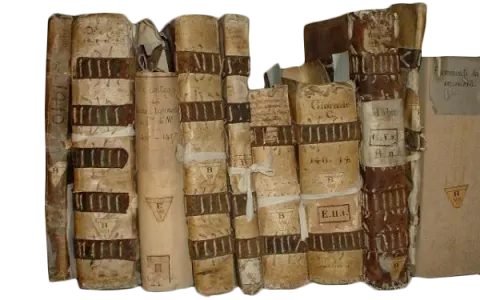
For successful conduct of business and creating profits, Cotrugli recommended keeping three books: a ledger, a journal, and a memo book. The ledger was book with an alphabetic index which enabled an access to any account quickly. A journal allowed methodical reconstructing of all capital, item by item, so that each number could be carried forward in the ledger and all accounts balance to debit and credit. The purpose of the memorandum book was to note every evening or morning everything traded and transacted on a day of commerce - the sales, payments, receipts, and remittances, orders of payment, exchanges, expenses, and promises. Additionally, a good merchant kept a small notebook for recording hour by hour the minute details of transactions for later creating accounts in the memo book or journal.
At the end of the each year, Cotrugli recommended checking the ledger against the accounts and the journal, making a trial balance and carrying forward all profits or losses in the capital account. Copying statements and letters sent, the merchant would also note on letters received their place of origin, year, and date, and then all were filed in bundles with other letters and retained contracts, instruments, chirographs, bills of exchange, and financial statements.
The basics of bookkeeping methods described and preserved by Cotrugli five hundred years ago were little changed since then and form a vital part of accounting practice to this day.