Room · 4 chapters
Feudalism
The system that allowed to some of the great feudal lords to become wealthier than their kings
“Homage” was a ceremony by which a person became a vassal of a lord in feudal society. The vassal surrender to the lord was symbolized by his kneeling and giving his joined hands to the lord, who clasped them in his own, thus accepting the surrender. Thereafter, the lord performed a symbolic investiture of the new vassal, handing over to him some object that represented his fief.
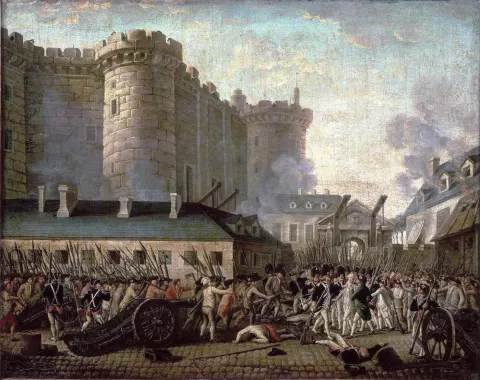
The Storming of the Bastille in July 1789, regarded as the most iconic event of the French Revolution, which, among others, marked the end of the Ancien Régime and feudalism
How and why did feudalism develop?
Feudalism was an economic, political and social system that prevailed in much of Europe during the Middle Ages and had flourished between the 9th and the 13th centuries. It arose in France in the 8th century, as the general uncertainty and virtual disappearance of monetary economics following the collapse of Western Roman Empire demanded organization of economy on different grounds.
Organization of feudalism
Feudalism denotes a set of rules and mutual obligations between a lord, who owned the land, and a vassal, who was granted the land and lord’s protection in exchange for various services and personal loyalty.
The greatest lord in hierarchically organized feudal system was a ruler who granted the land and fiscal privileges in hereditary use to his barons, who made up the nobility, in return for their military service and loyalty. The lowest vassals in feudal hierarchy were the peasants who lived on baron’s fiefs growing crops and paying taxes to their lords in return.
Church was an integral part of the feudal system in Medieval Europe which made it possible to obtain fabulous wealth through ownership of vast lands.
Source of wealth in feudalism
In lands where feudalism was in force nobles had long been the richest people in the kingdom. The greatest source of the noble’s wealth came from their fiefs which ranged in size from small pieces of land to entire duchies. However, the spoils of war obtained in military campaigns represented more controversial source of their wealth and referred to plundered goods and lucrative business of capturing and ransoming war prisoners.
Did feudalism foster business development?
The feudalism which was based on economically self-sufficient fiefs generally discouraged development of trade and with it related banking activities. Conduct of large scale trade was further undermined by tolls and fees that lords could charge on merchants passing through their land additionally increasing costs of venture.
Decline of feudalism
Multiple factors such as ascent of international trade, monetary economy, and emergence of professional standing armies starting from the 13th century gradually brought feudalism to an end. Nevertheless, in some parts of Europe the system did not came to an end long into the modern period.
Land was in the heart of the feudal system. The very name feudalism derives from a word “feudum” which denotes a fief or a grant of land.
For most of the Middle Ages, the monarchs were engaged in a prolonged struggle for power with the Church and powerful nobility. As supporters of the king, cities and merchants got important privileges useful for their business.
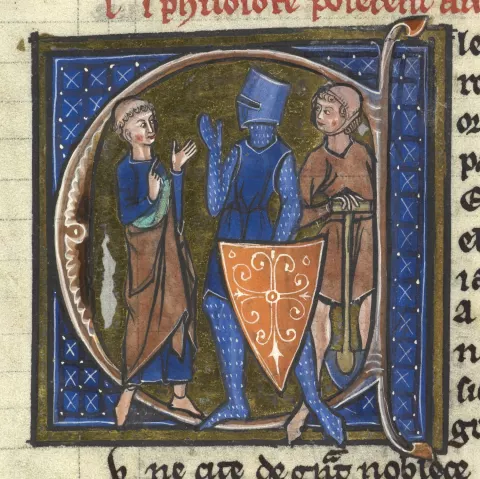
A 13th century representation of the tripartite social order of the Middle Ages – oratores - those who pray, bellatores - those who fight, and laboratories - those who work
Among various tolls and taxes which traders should pay on goods transported by land and water were some like “cespitaticum” or a tax paid for ruining the grass on the road, which seems bizarre.
Although the term feudalism is automatically associated with medieval Europe, some countries such as Japan also developed their own version of feudalism.
Chapters
Emergence of feudalism
The feudal system in Europe emerges during the 8th century, when the Carolingian dynasty is expanding its territories. Charles Martel grants his nobles rights over tracts of land and requires an oath of loyalty in return. The granted land serves as a source of income for the nobles with which they can provide soldiers for Martel’s army. This kind of relationship in which the lord gives the vassal an income-yielding fief, and the vassal does homage to the lord, is in the heart of feudalism. The largest fiefs are given by monarch, and once someone receives a fief from the monarch he can subcontract part of his fief to others, thus becoming lord to other vassal. Vassal’s obligation to provide their lords with military and financial help was called "auxilium", and the obligation to provide advice, that is to participate in judicial and administrative tasks, was called "consilium". In return, the lords were obliged to provide protection for their vassals.
From France feudalism spread throughout Europe, and by the late 11th century crusader states in the Middle East were based on the same principles. Some other, non-European civilizations such as Japan underwent similar processes and created their form of feudal system.
A 13th century representation of the tripartite social order of the Middle Ages – oratores - those who pray, bellatores - those who fight, and laboratories - those who work
Sources of wealth in feudalism
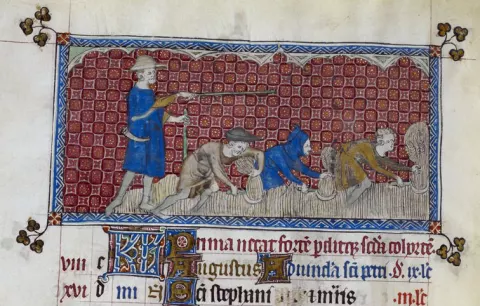
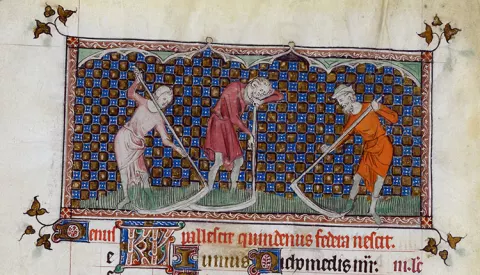
All of the production in feudalism rested on peasants, while the land was in the hands of nobles and clergy, as the Church was also part of the feudal system. The central economic feature of feudalism is the manorial system, a relationship between the landholder and his peasants. But not every peasant had the same status. There was a difference between the free peasants who were theoretically able to leave a manor at will, though economically often unable to do so, and serfs. Serfs were descendants either of slaves who were given a measure of freedom, or of free peasants who have accepted legal restrictions in return for the lord's protection. They were unable to leave a manor at will, and were tied to the manor even if it changed ownership.
Soon the land of the manor was divided to a so-called demesne which was farmed by the lord on his own account, using peasant labor, and the part which is cultivated by the peasants for their subsistence. The peasants had to pay the lord some form of rent, whether in natural produce, days and weeks of their own labor, or money. The rent paid in peasant’s labor was basically the earliest form of rent. The next step was paying rent in natural produce, which excluded working on the demesne and resulted in greater production. With the growth of towns and trade, the rent gradually shifted from paying it in produce to paying it in money. However, it was not unusual if all three forms existed simultaneously.
The value of a manor was not measured in its total surface, but in the number of villages on it. Until the mid-tenth century travel in Europe was a dangerous undertaking and the village had to produce all that was required for its survival. That also meant lowered efficiency of production.
During the 11th and by the beginning of the 12th century the agricultural production had significantly rose. Rise in the agricultural department stimulated the growth of trade, towns and craft within towns. There were several reasons for this kind of development: Europe became safer, new kind of heavier plough was used, and horses began to replace oxen as animals used for ploughing. The three-field system had also spread throughout Europe, what enabled the use of the two-thirds of the arable land instead of, as before, half. The rise of production stimulated demographic growth and the landowners stimulated creation of new villages. These changes also stimulated conversion of rents payed to feudal lords from paying in natural products to payments in money. Feudal lords also benefited from the growth of the trade and towns, as towns were also paying taxes to lords on whose domain they were situated.
Decline of the feudal system
There were multiple reasons for the decline of feudal system. The personal links between lords and vassals gradually weakened, and the vassals which were the foundations of the monarch’s power became an obstacle to his rule. The kings, who headed the feudal hierarchy, sought to bring them under control. In this task they found allies in the newly emerged middle classes and freemen who were not under the control of the lords.
The rise of agricultural production and the subsequent demographic growth from the early 12th century on played a major role. As the population grew the feudal lords sought to establish new villages in order to put more of their land under cultivation and to increase their incomes. To entice peasants to settle in new lands, which also needed much labor to bring them under cultivation, the lords granted certain privileges to peasants such as certain tax reliefs, or change in their status from serfs to free peasants. Increased agricultural production also stimulated the rise of towns and trade. The feudal rent also changed from the rent in natural produce to the rent in money, which meant that the peasants started to be actively engaged in trade. Some of them left their lives on land and became traders and craftsmen in towns, while serfs could accumulate enough profits to buy their freedom. The Black Death of the 14th century took about a third of total population. It increased demand for workforce, and the remaining workers sought better conditions for themselves.
The Storming of the Bastille in July 1789, regarded as the most iconic event of the French Revolution, which, among others, marked the end of the Ancien Régime and feudalism
Most towns were under control of some feudal lord to which they had to pay taxes, but as the towns grew they sought to relinquish themselves from the feudal control. Some towns bought their independence by paying off the lord, and some won it through military conflicts. The towns, with their rising economy, provided the kings with money with which they began to maintain independent armies and control the turbulent nobles. The state also developed professional government bureaucracy which reduced the rights of the nobility.
By the end of the 15th century the feudal system was much resolved, but nevertheless one of its main features, the serfdom, was still extant. The final end of serfdom came with the French Revolution of 1789. The Revolution formally ended serfdom in France and over the next century other European states had done the same. The last to formally end the serfdom was the Russian Empire in 1861.
Japanese feudalism
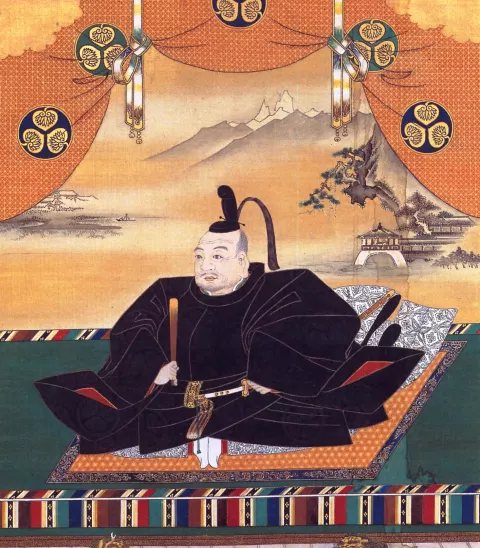
Japan is considered to have had its own form of feudal system from 12th till the late 19th century. The Japanese Emperor was a mere figurehead, while the real power was in the hands of the shogun. Shogun was at the top of Japanese feudal hierarchy, while his vassals were daimyo. They were large land-owners with the power over people on their lands. Samurai warriors served them and protected their lives and property. Unlike feudal knights, who were rewarded with land for their service to their lord, samurai did not receive land for their service. The land was the property of the daimyo who used a portion of their income from taxing the peasants to pay the samurai a salary, usually paid in rice. Samurai usually lived in the daimyos' castles and were greatly respected; when a samurai passed, members of the lower classes were required to bow and show respect.
Below the warrior class on the social ladder were farmers or peasants. Technically they were considered an honored class, but the farmers lived under a crushing tax burden for much of the feudal era. Japanese feudalism was permeated by Confucianism which stressed morality and filial piety, or respect for elders and other superiors. It meant that the moral duty of daimyo and samurai is to protect the peasants and villagers in their region, and the duty of the peasants and villagers is to honor the warriors and pay taxes to them in return.
The artisans were yet further down on the social ladder, and the merchants occupied the bottom of it. They were seen as "parasites" who profited from the labor of the more productive peasant and artisan classes. Merchants lived in a separate section of each town and the higher classes were forbidden to mix with them except on business. Nonetheless, as their economic power grew, so did their political influence, and the restrictions against them weakened.
The Japanese feudalism came to an end in 1868 when the emperor Meiji retook power in his own right, and abolished the office of the shogun. Prior to the Meiji Restoration, Japan maintained an isolationist policy toward the nations of the western world. During the Meiji Restoration Japanese society moved from being an isolated feudal society to its modern form.