Museum / Rooms / Economy of the Ottoman Empire
Room · 7 chapters · 14 lives
Economy of the Ottoman Empire
Cosmopolitan Empire that stretched over three continents
The Ottoman Empire
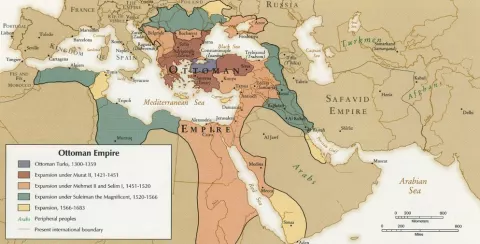
The Ottoman Empire is known as one of the largest and most powerful empires of the time. From the capital city in Istanbul the Ottoman sultans at the heights of power in the 15th and 16th centuries ruled over much of the Middle East, Southeastern Europe and North Africa whose large population, abundant natural resources and centuries old trade networks represented a valuable economic asset.
Economic policy
Agriculture and territorial expansion represented the backbone of the Ottoman economy. Despite the great potential the Ottoman Empire acquired from new lands and trade, the Ottoman economic policy shaped by traditionalism and interventionism braked the economic development in long terms, and ultimately disabled its entrepreneurial class to develop ideas and institutions that drove economic prosperity as it was case with mercantilist states of Western Europe.
In the mid-16th century the Ottoman Empire reached its maximum territorial size and the Empire could not count any more on war booty as a source of income. However, the final blow to the Ottoman economy was inflicted by the discovery of the new maritime routes to India which squeezed out the Empire from the newly established global world trade.
Trade
Trade was an important part of the Ottoman supremacy for 400 years. The favorable geographical position of the Ottoman Empire which was located at the crossroads of Europe, Asia and Africa enabled its rulers to monopolize the lucrative sea and land trade between the East and Europe.
To avoid bad influences of hereditary nobility as in the rest of Europe, the Ottoman sultans built bureaucracy and army completely composed of slaves devoted exclusively to their interests.
The Ottoman government intervened in determining of the prices of the goods and services sold in the market. For example, the rate of profit on consumer goods for merchants from the 16th to the mid-19th centuries was set a maximum of 5 to 15 percent, depending on the kind of economic activity.
Commodities
The main commodities that the Europeans imported to the Ottoman lands were woolens and silks, silver coins, tin, steel, and gunpowder. The Ottoman exports were wheat, cotton, silk and cotton textiles as well as hides, wool, wine, olive oil and Iranian raw silk.
The silk was one of the major export commodities of the Ottoman Empire with Bursa as the main center of silk manufacture.
Merchants
The international trade was placed in the hands of the foreign merchants (“mustemen”) who were granted an extensive trading privileges (“capitulations”) for doing business in the Ottoman Empire. Although in this way the Ottoman government increased the circulation of European goods and the state revenues, in long terms capitulations proved to be fatal for the Ottoman economy. When the Europeans began to export Ottoman raw materials and return them back in the form of cheaper and better manufactured goods, the Ottoman merchant and manufacture class were devastated as well as the Ottoman economy in general.
Until the mid-16th century, Venetian and Genoese trading cartels were dominant in trade with the Levant and starting from the 2nd half of the 16th century other Western powers, such as France, England, and Dutch Republic gradually obtained commercial privileges in the Ottoman Empire.
Business practices
Similar like in the Catholic world, the Islamic world also had prohibition on usury and interest rates called “riba” that curbed business performance. To perform business, the entrepreneurs could obtain credits from the Muslim, Christian and Jewish moneylender at annual interest rates ranging from 10 to 20 percent. In financing of a long-distance trade the Ottoman entrepreneurs more often formed “mudāraba” and “musharaka” partnerships and relied on “suftaja”, an Islamic version of bill of exchange. “Mudāraba” was the most common form of business partnership in the Islamic world between the 9th and 19th centuries. It was an agreement of two partners whereby one provides finance (“rabal-maal”) and the other provides labor (“mudarib”). Profits were shared according to predetermined ratio, usually 50-50, while loss was borne by the investor alone.
Money and monetary system
The monetary system of the Ottomans was based on silver. Until the 16th century the Ottoman Empire could boast with a unified monetary system which was based on three coins – the silver “akçe”, the gold “sultani”, and the copper “mangir” or “pul”. However, the monetary stability of the Empire was undermined by the huge influx of silver from Americas in the 16th century which caused inflation and hurt the Ottoman economy as whole.
Chapters
Economic policy
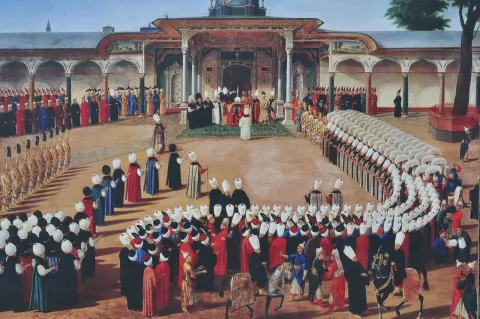
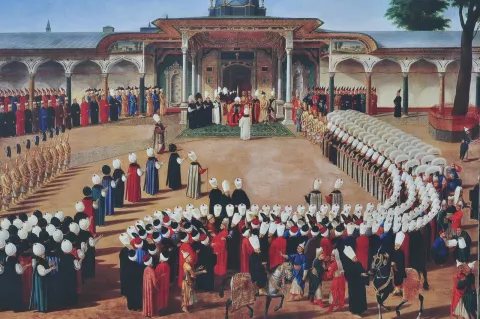
The Ottoman Empire was one of the largest and prosperous empires in the world history. Success and longevity of the Ottoman civilization partly can be explained by strong and centralized rule of its capable rulers, efficient and organized military structure mainly known for the famous janissaries, and favorable geographical position.
In only a few centuries, the Ottoman state expanded from a small principality in northwestern Anatolia to the world power that stretched on three continents. At the heights of its power in the 16th century, the Ottoman Empire encompassed all of southeastern Europe up to the northern frontiers of Hungary, Anatolia and the Middle East up to the borders of Iran and North Africa.
In classical period of the Ottoman economic history that stretched from the 14th until the end of the 18th century the main feature was the policy of interventionism. The Ottoman government, called Sublime Porte headed by Sultan, had an active role in controlling and regulating economic state affairs. By giving priority to domestic economy, the Porte managed to build prosperous and self-sufficient empire which had an important role in the political and economic scene of the world. However, in long-terms this policy resulted with the slower economic growth in comparison to the West causing in the end its political decline as well.
Agriculture
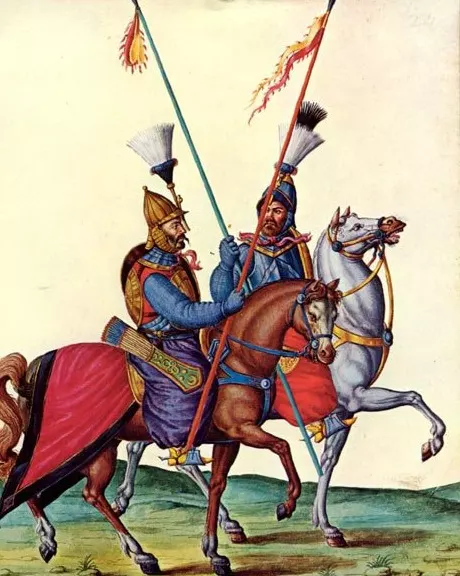
In the Ottoman Empire, the majority of productive land was in the state ownership (miri). Unlike Western countries, the Ottoman rulers managed to build the military-feudal system based on the absence of private ownership of land. According to timar system, the sipahi or cavalrymen was only given the right to use “timar” or landed estate along with the right to collect taxes (like tithe and farm tax) in exchange for military service. To avoid bad influences of hereditary nobility as in the rest of Europe, the Ottoman sultan conditioned the use of timar that depended on the quality of sipahi’s service to the ruler and the state goals.
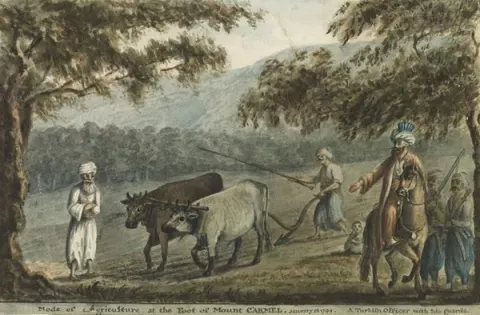
The çift-hâne system, which represented the base of the economic and social order in this period, was an important part of this system. Its two elements, the peasant household (hâne) labor and yoked pair of oxen (çift) determined the size and production capacity of the farmland. The peasants had perpetual tenancy of the fields and were obliged to pay taxes.
In inland provinces of the Ottoman Empire, close to 90 percent of production made cereal grains, particularly wheat and barley. In parts of the Empire that were not densely populated, grain production was combined with livestock husbandry. In coastal regions a greater mix of crops was cultivated – from cotton and rice to fruit and vegetables.
Trade
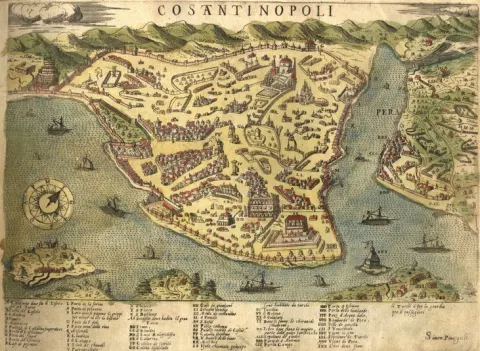
Map of Constantinople by Braun & Hogenberg, c. 1574. Pera, which was the center for European traders in the city is labeled on the right.
The Ottoman Empire was situated in the extremely favorable geographical position at crossroads of Europe, Asia and Africa that enabled its trade and political supremacy for almost four hundred years. The sultans controlled the lucrative major trade routes between Asia and Europe, and participated in the Mediterranean and the Black Sea trade. The Ottoman trade can be divided on internal and external. While the internal trade was in the hands of Ottoman subjects, both Muslims and non-Muslims, the external trade was in the hands of foreigners.
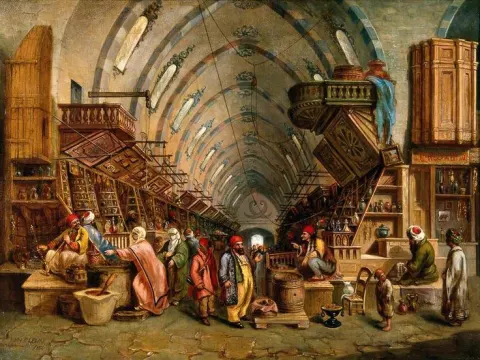
Caravans and seaports were important factor of the long-distance trade. In cities, the goods were sold on bazaars (“çarşı”) and permanent markets (“bedestan”), while the rural areas maintained markets and fairs weekly.
merchants
Ottoman Trade
Merchants
The international trade was placed in the hands of the foreign merchants (“mustemen”) who were granted an extensive trading privileges ("ahdname" or “capitulations”) for doing business in the Ottoman Empire. Trade privileges included the right to unrestricted trade, the use of Ottoman ports, and the exemption from various taxes in the import and export of goods within the Ottoman Empire. Until the mid-16th century, Venetian and Genoese trading cartels were dominant in trade with the Levant and starting from the 2nd half of the 16th century other Western powers, such as France, England, and Dutch Republic gradually obtained commercial privileges in the Ottoman Empire.
The main commodities that the Europeans imported to the Ottoman lands were the woolens and silks, silver coins, tin, steel and gunpowder. The Ottoman exports were wheat, cotton, silk and cotton textiles as well as hides, wool, wine, olive oil and Iranian raw silk.
Although in this way the Ottoman government increased the circulation of European goods and the state revenues, in long terms capitulations proved to be fatal for the Ottoman economy. When the Europeans began to export Ottoman raw materials and return them back in the form of cheaper and better manufactured goods, the Ottoman merchant and manufacture class were devastated as well as the Ottoman economy in general.
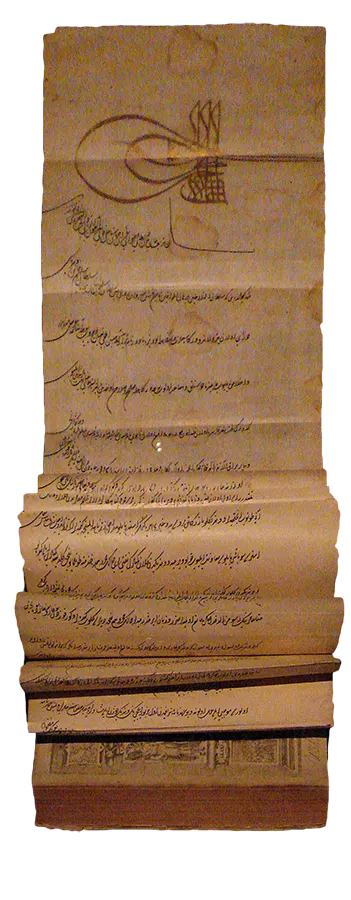
Capitulation reopening trade between Venice and the Ottoman Empire signed 2 October 1540, following the Battle of Preveza.
At the peak of its power during the 15th and 16th centuries, the purpose of trade was to achieve self-sufficiency of the Empire. To achieve that, the Ottoman trade and economy were focused on imports, and prohibited the most exports. Export was an option only after domestic demands were satisfied. That was in a sharp contrast with the policy of mercantilism, in which imports were discouraged while exports were encouraged, practiced by the Western Europe at the time.
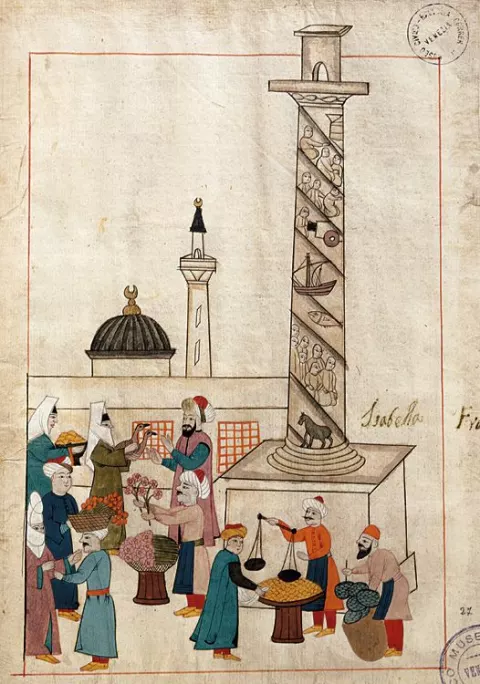
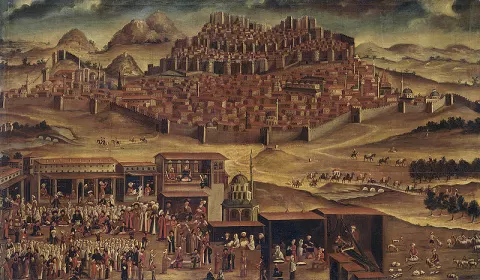
Venetians, Turks and others would have met in markets like this one in the Jerrahpasha district of Constantinople, across the Golden Horn from the Venetians' trading centers.
financial instruments
Ottoman Trade
Financial instruments
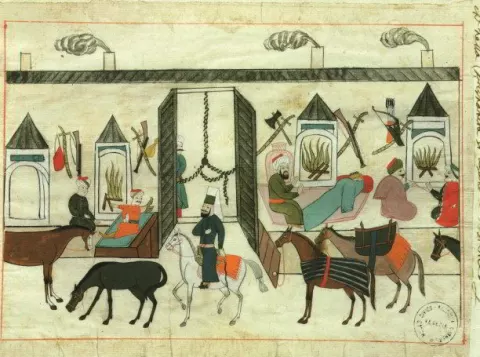
The interior of a Turkish caravanserai, or travellers' inn, coloured drawing in a 17th-century Ottoman manuscript.
Similar like in Catholic world, the Islamic world also had prohibition on usury and interest rates called “riba” that curbed business performance. To perform business, the entrepreneurs could obtain credits from the Muslim, Christian and Jewish moneylender at annual interest rates ranging from 10 to 20 percent. In financing of a long-distance trade the Ottoman entrepreneurs more often formed “mudaraba” and “musharaka” partnerships.
“Mudaraba” was a partnership between the investor (“rab al-mal”) who provided the capital and an agent (“mudarib”) who provides labor and business expertise in long-distance trade. The agent was entitled to a percentage of the profits, but any losses were incurred solely by the investor. In a slightly different arrangement, the “musharaka”, the agent could participate with his own funds in the venture, thereby receiving a higher percentage of the proceeds. One important instrument in the finance of long-distance trade was the “suftaja”, a bill of exchange or letter of credit. Their basic purpose was to expedite long-distance payments or transfer of funds.
Manufacture and guilds
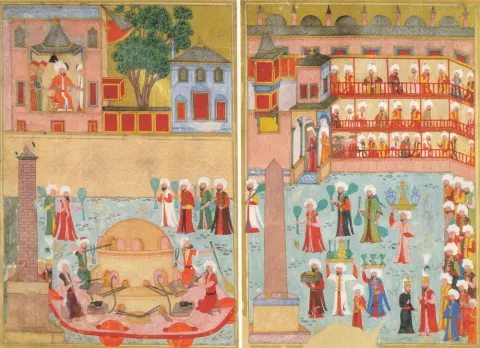
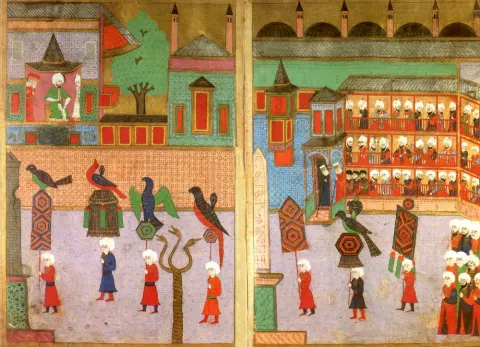
The manufacturing sector of the Ottoman economy was generally small and confined by the framework of guilds. The only exception represented the state-owned industry of armament. The Ottoman government protected the guilds from foreign economic competition and tried to secure the necessary raw materials, like silk, for the trade. The guilds were in the same time put under strict government control. Artisans, craftsmen and merchants were able to work only under the guilds. The guilds regulated economic activities, setting quality and pricing standards that guild members had to respect in order to continue in their operations.
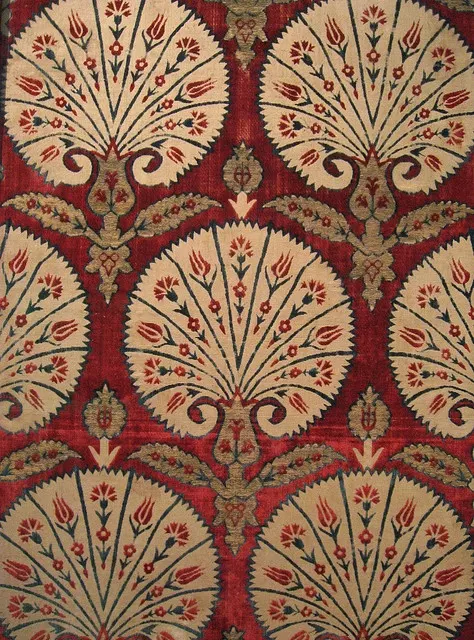
From the beginning, the Ottoman textile industry was oriented to export. The silk was one of main export commodities, and Bursa in Anatolia one of the main centers of silk manufacture. The others represented Istanbul, Amasya, Aleppo, Mardin and Diyarbekir. They were particularly sought by Poland, Sweden and Muscovy. Cotton goods and mohair, the latter exclusively manufactured in Ankara (16th-18th century) were also intended for export. Toward the end of the 16th century, the Ottoman woolen and silk manufacturing industries were severely affected by the growing importation of cheaper Western products. However, the textile products and especially cotton cloth, continued to be exported to Europe into the late 18th century. The major weaving centers of the time were Edirne, Thessaloniki, Bursa, Ankara, Baghdad, and others.
A Picture of Ankara, 18th century.
Ottoman silk textile, 16th century.
Labor
The Ottoman state has also imposed control over the labor and production. The aim of this policy was to supervise the mobility of labor and all aspects of production in order to cope with insufficient production that was characteristic for the preindustrial-age.
By the 17th century the government started to issue guilds monopoly licenses (“gediks” or patents) determining that certain products or services could only be performed by members of specified guilds. In that way the state was able to control urban sector of artisans. The prices of the goods and services sold in the market, and the wages paid by the guilds were determined in consent with the state officials. For example, retail merchants selling Egyptian flax in 1726 in the capital city as raw material with minor processing were allowed a profit of 6,5 percent, while more complicated production like ceramics or nails provided profits as high as 20 percent. The rate of profit on consumer goods for merchants from the 16th to the mid-19th century was set a maximum of 5 to 15 percent, depending on the kind of economic activity. For example, in retail and wholesale trading the rate was 5 to 10 percent.
Monetary system
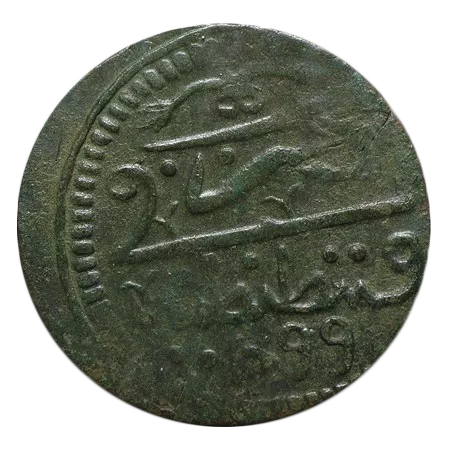
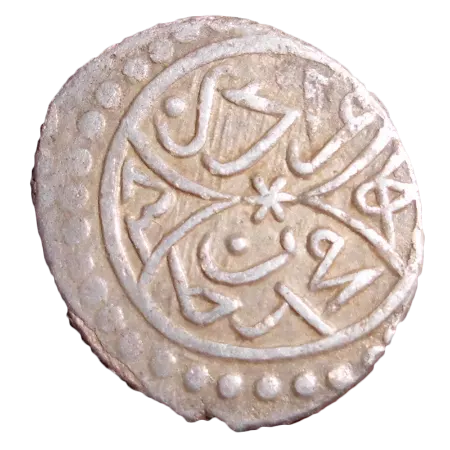
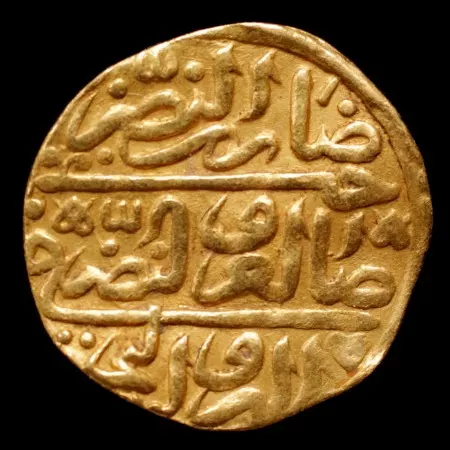
Until the 16th century, Ottoman territories in Anatolia and Europe had a unified monetary system. It was based on three coins – the silver “akçe”, the gold “sultani”, and the copper “mangir” or “pul”. The silver “akçe” provided the standard for the gold “sultani” and the copper “mangir”.
The basic unit of payment represented the “akçe”, which was commonly used in local transactions. The silver value of the coin fluctuated depending on changes within the Ottoman government. As for the gold “sultani”, it originally remained identical to gold coins of other Mediterranean states, such as the famous Venetian ducat. In short, the Ottoman Empire had an established bimetallic system based on silver and gold.
Coins were minted in certain cities close to silver mines. The state auctioned mints and their revenues to private entrepreneurs. The local “kadis” were responsible for overseeing the work of the mints and the metal standard of the minted coins. With the expansion of the Ottoman Empire beginning in the 15th century, this started to change since it became impossible to maintain a single monetary system for the whole territory.
The monetary stability of the Empire was undermined by the huge influx of silver from Americas in the 16th century which caused inflation and hurt the Ottoman economy as whole.
Taxation
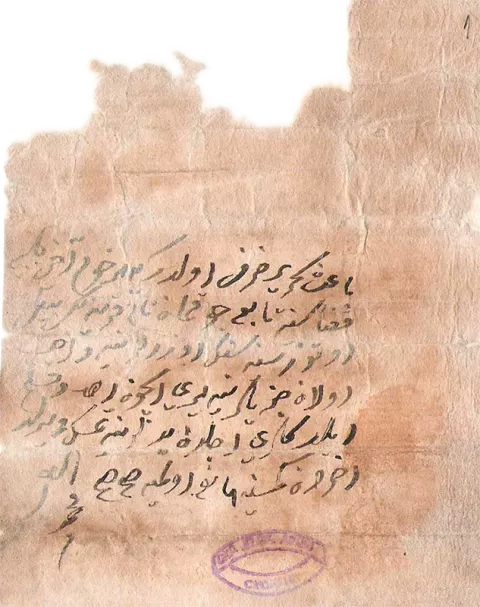
A receipt for cizye (poll-tax) paid by the village of Chokmanovo.
Until the first half of the 19th century, taxation was mainly applied to the productive sector (“reâyâ”) comprised of merchants, artisans, peasants and nomads, while the ruling military class (“askerî”) was exempted.
Taxes were generally applied into two basic categories: Islamic (şer’î) and customary (örfî). Islamic taxes included the tithe, the zekat, the poll tax and tribute tax (“harac”). Customary taxes were also divided on the farm or feudal tax and extraordinary levies imposed on the population during times of war or crisis. Extraordinary taxes would become a regular part of taxation as the Ottoman Empire became extensively engaged in wars in Central Europe and on the eastern borders.
The Ottoman government collected revenues by using the tax farming method called “iltizām“. The state auctioned taxation rights to the highest bidder, who gained the right to collect taxes and made payments in fixed installments, keeping one part of revenues for his own use. The system covered farming of land taxes, the farming of urban taxes, and the production of certain goods such as wine and salt, and provision of certain services. The system which began to be used from the time of sultan Mehmed II (15th century) was officially abolished in 1856.
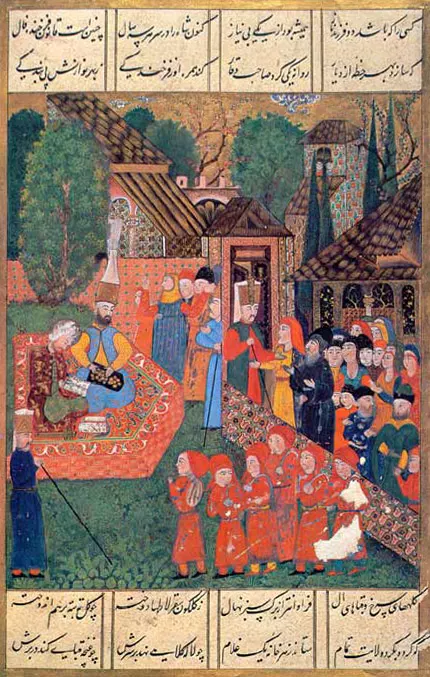
Illustration of the registration of Christian boys for the devşirme (also known as the blood tax or tribute in blood), 1558.
14 lives in this room
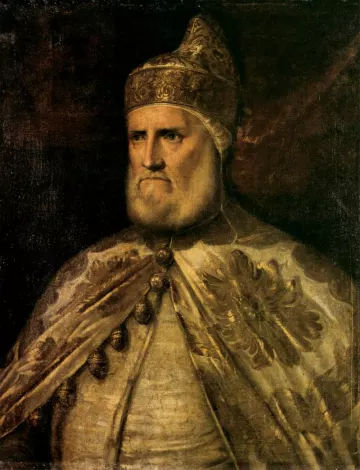 Andrea Gritti1455-1538
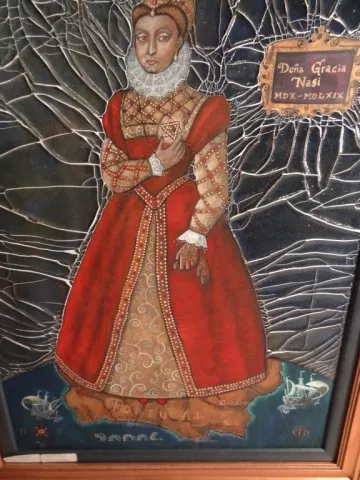 Gracia Mendes Nasi1510-1569
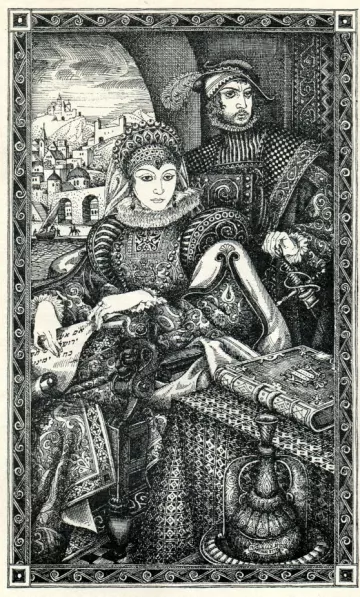 Joseph Nasi1520-1579
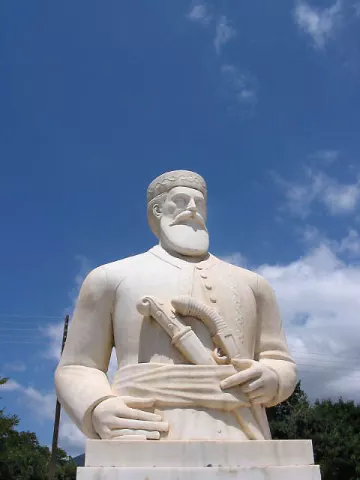 Daskalogiannisc. 1722-1771
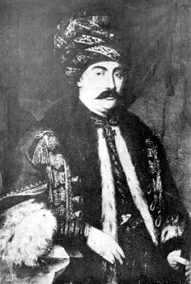 Manuc Bei1769-1817
More lives in this room
- Solomon Abenaes c.1520-1603
- Solomon Usque c. 1530–c. 1596
- Benjamin b. Mattithiah 16th century
- Apkar Tebir d. c. 1572
- Michael Kantakouzenos Şeytanoğlu d. 1578
- Ester Handali d. c 1590
- Esperanza Malchi d. 1600
- Khwaja Petik d. 1632
- Bekhor Isaac David Carmona 1773–1826