Museum / Rooms / Economy of Ancient Egypt
Room · 7 chapters · 15 lives
Economy of Ancient Egypt
ECONOMY OF THE ANCIENT EGYPT
Centrally planned and organized agricultural economy was the main source of riches, power, and longevity of the fabulously wealthy Egyptian civilization
Gift of the Nile
Agriculture was the base of Ancient Egypt’s wealth. The most important economic event in ancient Egypt was the annual flooding of the Nile floodplain which determined whether the harvest will be abundant or scarce. The Nile was also a communication artery of the kingdom that supported the functioning of the economy.
Command economy
Ancient Egypt was run as a theocratic monarchy which meant that all living and nonliving in Egypt was considered the ownership of the divine Pharaoh. The form of economy pursued was known as “palace” or “command” economy in which the crucial role belonged to the Pharaoh and his loyal bureaucratic network of scribes, nobles, and priests.
Situated along the River Nile and protected by wide deserts the ancient Egypt enjoyed prosperity and continuity for almost three thousand years ─ from its unification around 3100 BC to the Roman conquest in 31 BC.
Economic activities of major importance for the state like agriculture, mining, manufacture of luxury and foreign trade were strictly supervised and financed by the Pharaoh.
Taxes
The main source of Pharaoh’s revenues were taxes paid in the form of grain and labor for state projects and military. The tax imposed on farmers was equal to about 10 to 20 percent of the annual harvest.
During years of drought and bad harvest, the Egyptian rulers remitted their subjects of taxes to enable them to recuperate. The name of this practice called “philanthropa” is the word from which word “philanthropy” derives.
Public and private
As the main sponsor of international trade and large scale ventures the Pharaoh left little space for rise of private entrepreneurship and financial innovations to support business. This was the reason why the class of private businessmen never developed in Egypt to the extent as in other contemporary civilizations where the individual initiative was tolerated and fostered.
The social position of women was especially advantageous in the Egyptian society, and determined by rank and not gender. The Egyptian women were allowed to participate in business, they enjoyed the legal rights, and most importantly, they were paid equally for equal work as men what is advanced even for today's terms.
In ancient Egypt was recorded the oldest strike in the world history for better working conditions. It took place in the 12th century BC in Deir el Medina during the reign of Ramses III – and, what matters, it ended successfully.
Trade expeditions
Convinced of the superiority of their civilization the Egyptian relations with other countries like Mesopotamia, Lebanon, Greece and the mystical land Punt in the Red Sea did not go beyond the trade exchange. They also founded colonies in Nubia, Syria, and Palestine for economic reasons – as a base for mining expeditions and trade, and as foothold to enhance their political power.
The main Egyptian exports were grain, gold, and manufactured items produced by craftsmen employed in state or temple workshops such as papyrus, pottery, linen and luxury goods which were exchanged for wood, metal (silver and copper), oils and luxury items such as spices, glass, ivory, lapis lazuli and the animal skins that Egypt lacked.
Papyrus after which paper is called was among the main Egyptian export products and the most common writing material throughout the ancient world. Perfumes were also a valuable export commodity and the Egyptians were known as masters of the art of perfumes.
Monetary system
Despite the wealth the classical coins were not used in ancient Egypt until around 500 BC. In commercial life prevailed bartering and to set the value of goods and services for bartering they used “deben”. Deben was the unit of weight that corresponded to 91 g.
The salaries in ancient Egypt were calculated in units of bread and beer, the two basic staples in Egyptian diet. The standard basic wage was ten loaves of bread plus one-third to two full jugs of beer per day. This was the amount paid to the lowest-paid staff members.
Chapters
- Political framework of Egyptian civilization
- Society
- Features of Egyptian economy
- Agriculture
- Trade
- Manufacturing industries
- Transportation
Political framework of Egyptian civilization
The civilization of Ancient Egypt is known as one of the earliest and longest lasting civilizations in world history.
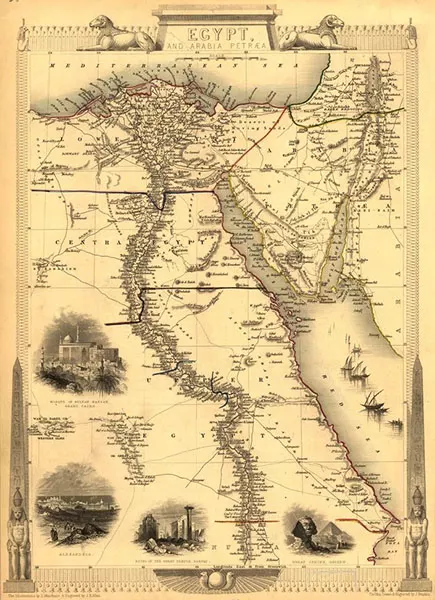
According to conventional chronology, the beginning of Egyptian civilization is placed in 3150 BC when the political unification of Upper and Lower Egypt took place under the first pharaoh. The history of ancient Egypt occurred in a series of stable Kingdoms - the Old Kingdom, the Middle Kingdom of the Middle Bronze Age and the New Kingdom – which were separated by periods of relative instability known as Intermediate Periods. The Egypt reached the highest level of wealth and territory in the New Kingdom (1552-1069) when it stretched from the Syrian coast in the north, to the Red Sea in the east, down the Nile valley to Nubia in the south, and spreading west into the Lybian Desert. With the exception of a few periods of foreign rule − the Hyksos and Persians, the pharaonic rule had continuity for almost 3,000 years, ending in 30 BC when Egypt was conquered by the Romans.
During its 3000 years long history, the economic stability of the ancient Egyptian civilization under the rule of the Pharaoh and loyal class of priests and nobility enabled its growth into one of the most brilliant and advanced civilizations in Antiquity.
Society
Economic life of ancient Egyptians was closely associated with their complex religious system and highly ordered social hierarchy.
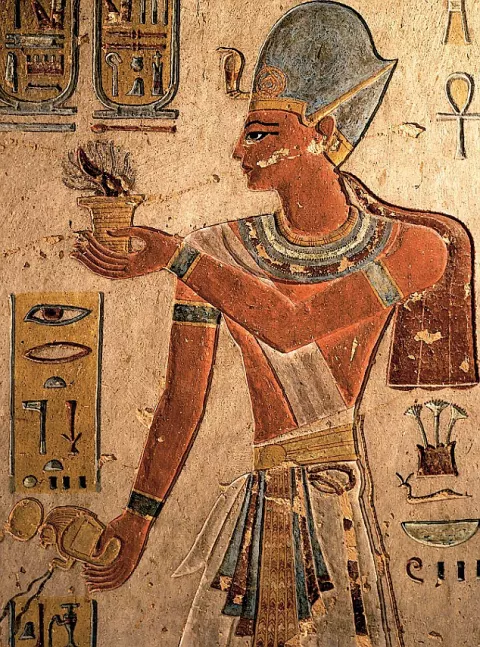
By its nature, ancient Egypt was theocratic monarchy. Its ruler, pharaoh (Greek “pera’a” = royal household) was considered representative and incarnation of the god Horus and it was believed that his rule is coming from heaven. According to one ancient text “He is a god by whose dealings one lives, the father and mother of all men, alone, by himself without an equal”.
Pharaoh on ancient Egypt was the unique link between the gods and men. He was considered the owner of all lands, goods and people in Egypt, and an absolute monarch whose responsibility was safety and well-being of his subjects. Therefore, he was guarantor of the fertility of the land and fecundity of livestock, and as such he was an object of worship by his subjects.
In his rule over the Earth, pharaoh relied on extensive bureaucratic system of loyal and competent officials, ministers and courtiers who brought his rule and orders to the most distant part of the kingdom and to the lowliest subject. They were heavily dependent on the Pharaoh since their wealth and legitimacy depended of his will.
The highest royal official in ancient Egypt, the prime minister and personal adviser of the pharaoh was “Vizier” or Chief Overseer called in ancient Egypt “djat” or “tjat”. He was elected from the king’s family or among the most promising royal scribes. His responsibilities included the supervision of finances, revenue, tax collection and civil order in addition to matters of justice, agriculture, irrigation, building projects and public works. For his services, vizier was rewarded with considerable wealth and privilege.
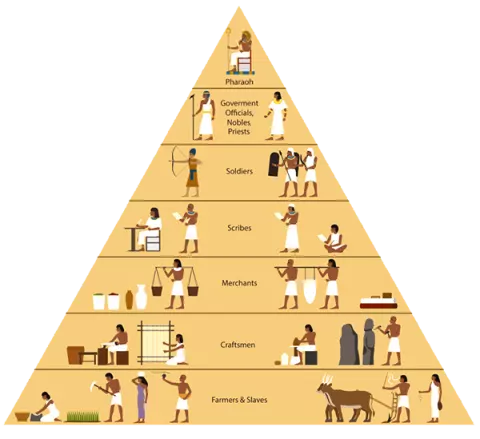
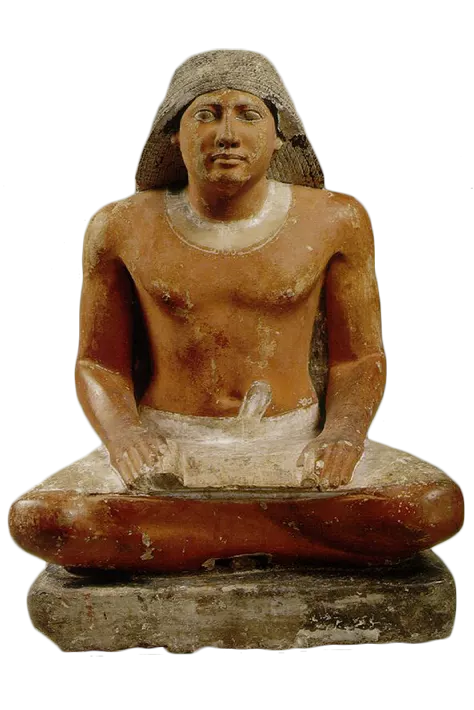
In fulfilling his duties, the vizier relied on powerful class of hereditary nobles (landowners), priests of temples and scribes. They formed the upper level of the Egyptian society. The government posts in Egypt were only available to nobles. The scribes were particularly esteemed as they represented the literate elite and their life is called “the path of the god” in one ancient document. Except that they had to know at least 800 hieroglyphs and were qualified in reading and writing, they were well versed in classic texts, mathematics, basic of law and administrative procedures.
The middle class of Egyptian society was made by craftsmen, artisans and traders who generally enjoyed higher social status and better standard of living than ordinary peasants. However, most of them remained anonymous in history, mainly because they worked in teams and were largely employed in state or temple workshops. Similarly, the merchants of ancient Egypt were hired by temples or state to provide additional goods on marketplaces for residents of Egypt. They also traveled outside their civilization in order to obtain exotic and rare goods demanded by the upper-class. Therefore traders were considered important mediators in the exchange of material and cultural goods between the different cultures of antiquity.
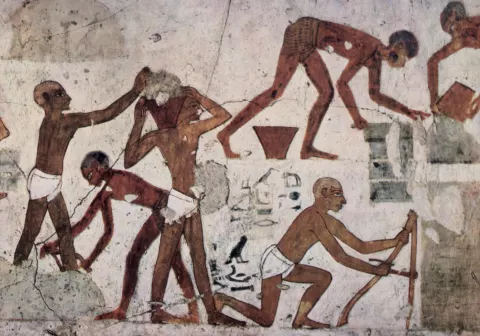
The bottom of the social structure contained the farmers and beneath them, the slaves. Like in all ancient societies which were based on agriculture, farmers made up the bulk of the population. The land did not belong to them but to pharaoh, temples or wealthy nobles. Farmers were obliged to pay taxes in a form of crops and labor, and they were required to work on irrigations or construction projects in a corvèe system, that is compulsory and unpaid labor demanded by the ruler. Slaves were people that may have been prisoners of war or criminals, and many were forced to hard labor in mines and quarries.
Although the belonging to the certain social class in ancient Egypt was determined by birth, there were possibilities, although the small ones, of moving into the next higher class.
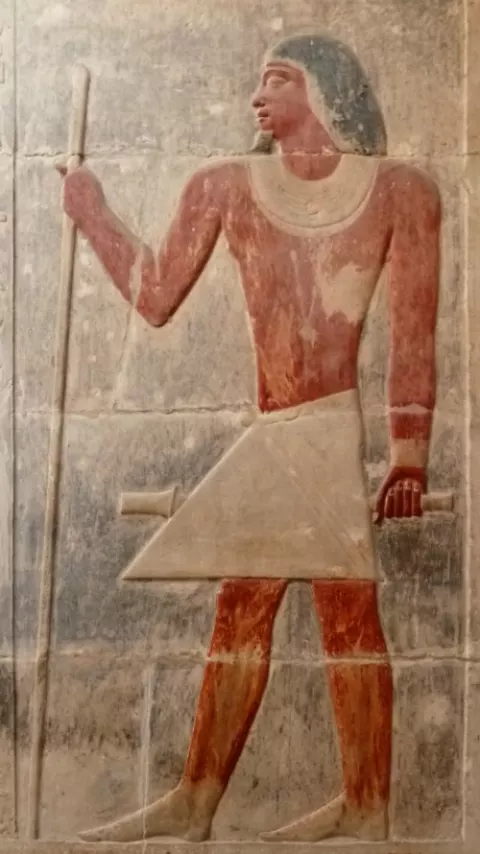
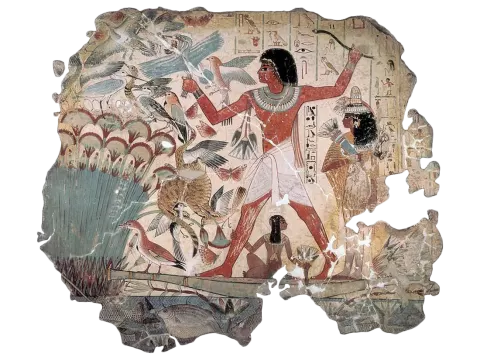
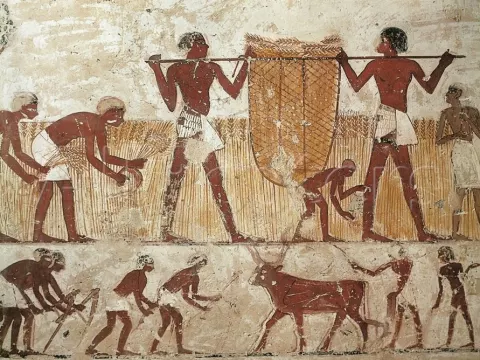
Ancient Egyptian farmers at work.
Features of Egyptian economy
Features of Egyptian Economy
Economy of Ancient Egypt
Features of Egyptian Economy
Ancient Egypt was an example of command (state dominated) economy in which all economic activities were created and managed by the ruler and ruling class, while the private sector had a limited and secondary role. Land and natural resources constituted the principal sources of wealth in ancient Egypt. The Pharaoh and temples dominated agricultural production and distribution, as well as production of luxury goods and foreign trade in most periods. State provided the necessary capital and risk sharing in long-distance trade, as well as in large-scale economic activities such as mining. Thus, the strong and centralized political power left little space for the ascent of private sector and entrepreneurship, as it was case with Mesopotamian civilization.
Agriculture and taxes
Features of Egyptian Economy
Agriculture and taxes
Similarly to other ancient civilizations, Egypt’s economy was based on agriculture. Thus, development and maintenance of irrigation system which regulated the annual flooding of the Nile River was essential for production of abundant crops and for the survival of civilization. Its control became a major state concern.
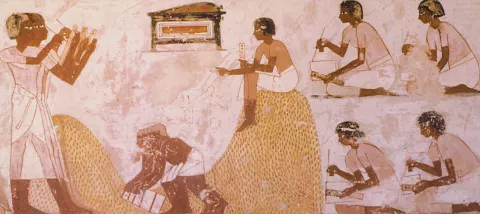
Since a bad harvest could cause a serious turmoil, the government eventually established policy to mitigate the impact of a low crop yield by storage of food supplies to prevent economic as well as political instability. The system, in which the excess crops were collected and stored in a granary network throughout the country for local needs, and in capital for redistribution to craftsmen and workers on public projects, soon emerged as an important feature of economy.
A tomb painting of scribes recording a grain harvest. Laborers scoop the grain into sacks of a standard size, and a seated official counts the number of sacks on his fingers. Scene from the tomb of Menna, 14th century BC.
The land was a significant source of wealth, and pharaoh who owned the entire land was involved in redistribution of wealth and power in Egypt by granting lands and benefits to loyal nobleman and temples. Thus, temples in ancient Egypt functioned almost as independent economic units.
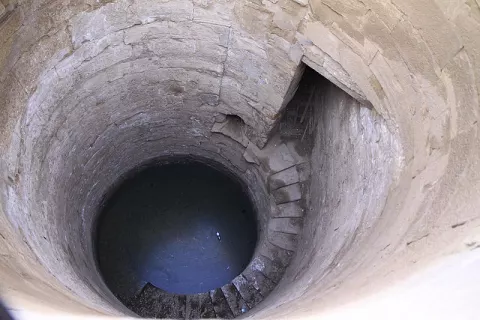
The Egyptians were among the first people to pay taxes. The taxes were collected in grain and in the following way. The viziers measured the height of the Nile flood using a “nilometar”, steps built into the riverbank to show the height of the water, since the flooding determined how much land would be fertilized. According to this measurement, it was determined how much each “nome”, that is one of the 42 administrative districts in which Egypt was divided, should have been able to produce. Each farmer bases was taxed on this amount, instead of calculating how much people produced each year. Interesting is the fact that during hard times, Egyptians applied the policy of remitting taxes which was originally called “philantropa” and from which our word “philanthropy” is derived.
Monetary policy
Features of Egyptian Economy
Monetary policy
An important feature of the ancient Egyptian economy is that never developed a genuine monetary economy. Instead it developed a sophisticated barter system or exchange of goods and services for other goods and services.
In earlier times, grain served as a kind of money and could be changed for other commodities in accordance with fixed price lists. The workers usually received salaries in form of wheat, barley, and occasionally even in craft products such as pottery, clothes and other. A simple laborer might earn 5½ sacks (200 kg or 400 lb) of grain per month, while a foreman might earn 7½ sacks (250 kg or 550 lb). Taxes and tributes were also paid in goods as stated above.
Although currency was not used in earlier period, sometime around 1580 BC nevertheless emerged the system which assigned to every item a value in terms of precious metals (such as gold and silver) to facilitate trade and make it more uniform. Goods of small value were measured in wheat, while highly valued items were measured in copper, silver of gold. The “deben” was a designated weight employed in such barters. A “deben” was about the equivalent of 3,3 ounces. There were also metal tokens or fixed weights used during bartering that bore the name “shet”, “shena”, “shenat” or “siniu”.
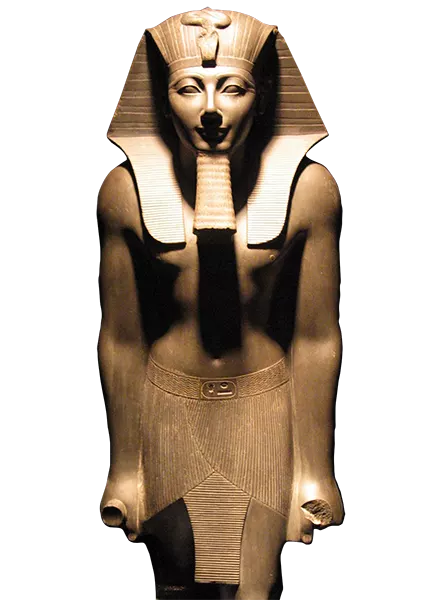
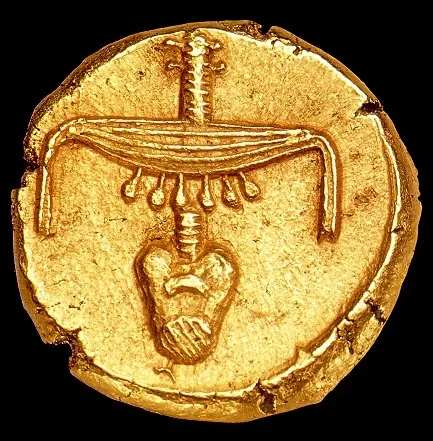
The monetary system was introduced by the pharaoh Tuthmosis III (r. 1479-1425 BC) during the period of New Kingdom (1550-1070 BC). However, the coins began to be minted during the rule of Thirtieth Dynasty (380-343 BC), and to this period the Egyptians used in financial transactions foreign monetary units.
During the Hellenistic Ptolemaic Period (304 – 30 BC) Egypt introduced a sophisticated banking system and Greek coins. In Alexandria was located the central bank and public banks also existed in major cities. Even the rural areas had smaller agencies. Agencies collected government revenues and handled loans to farmers and businessman.
Colonization as a tool for economic growth
Features of Egyptian Economy
Colonization as a tool for economic growth
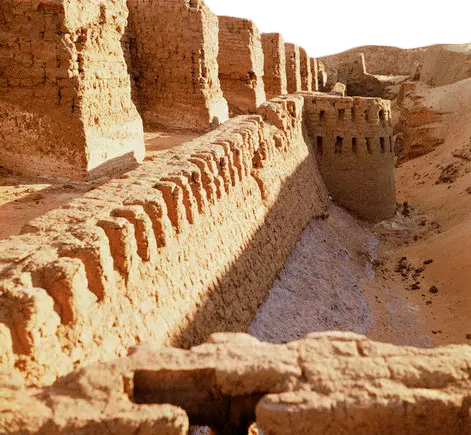
Photography of Egyptian fortress Buhen in the second cataract of the Nile.
The ancient Egyptians established colonies for economic reasons – as a base for mining expeditions and trade, and as foothold to enhance their political power.
The first colonization wave occurred during the reign of Snefru, in the Fourth Dynasty (c. 2575 –c. 2465 BC) and resulted with the establishment of colony in Buhen, Nubia which served for the next two and half centuries as a base for mining expeditions and trade with lands to the south. The colonization continued during the Twelfth Dynasty of the Middle Kingdom (2030-1640 BC) when a series of large fortresses were built there. Except Nubia, Egypt's expansionist interests included Syria and Palestina. Several military campaigns were launched there during the Eighteenth Dynasty of the New Kingdom with the aim to establish colonies on that soil and secure the access to goods like copper, timber, tin, resins, wine, olive oil, obsidian, spices and incense.
Particularities of economic life
Features of Egyptian Economy
Particularities of economic life
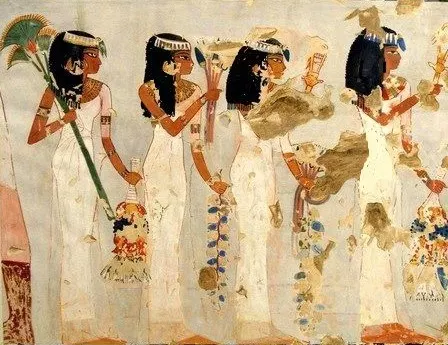
An interesting phenomenon of Egyptian society is extremely advantageous position of women whose social status was determined by rank and not gender. Women of ancient Egypt enjoyed many legal rights. They participated in business transactions and owned, managed and sold land and private property. They could arrange adoptions, liberate slaves, finalize legal settlements and execute testaments. Furthermore, women could testify in court and bring suit against other parties, and they could represent themselves in legal disputes, without the presence of a male relative or representative. In ancient Egypt the self-made woman was allowed to rise in status and position. Many professions such as mourner, weaver, baker, midwife and advisor to the pharaoh, priestess, scribe or doctor were open to women. And most importantly, women were paid equally for equal work as men in ancient Egypt.
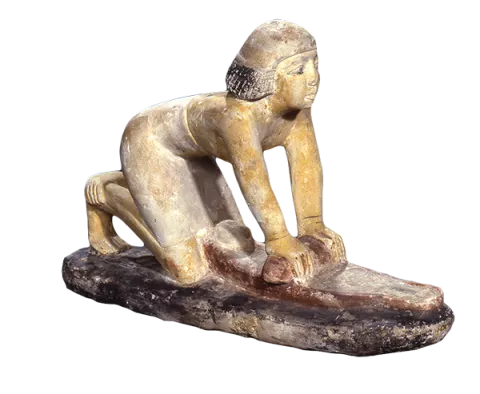
A woman grinding grain into flour on a handmill for the production of bread or beer.
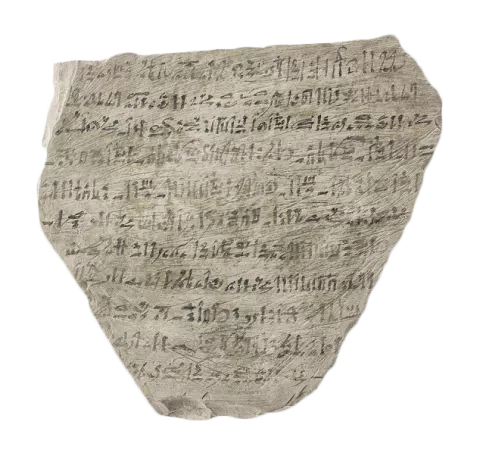
Another interesting fact is that in ancient Egypt occurred one of the oldest fighting for better working conditions. The best-known case dates back to the 12th century BC during the reign of Ramses III and it is one of the first recorded strikes in history. Namely, the workers engaged in construction of the royal necropolis of Deir el-Medina organized a peaceful protest and refused to leave the complex until they received the agreed amount of grain for the work they done. The strike ended successfully.
Agriculture
Recognizing the importance of the Nile for all life in Egypt, already in the middle of the 5th century BC a Greek historian Herodotus called Egypt the “Gift of the Nile”.
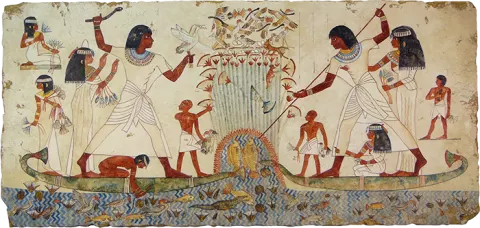
Agriculture was a backbone of the Egyptian economy and the source of its enormous wealth. In order to overcome the force of the Nile, the Egyptians invented a year-round irrigation system. The ideal height for the waters to rise was about 25 to 30 feet, and all outside of ideal was dangerous. The Egyptian officials measured and recorded the level of annual flood by already mentioned “nilometer”. Low water, that is, level less than six feet below the target meant food shortages and probably famine, while high water, which is highs of six feet over the ideal, brought another disaster – the destruction and flooding of entire villages and fields.
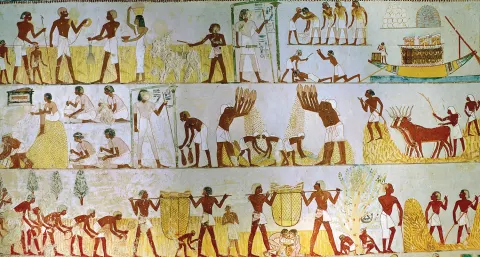
The agricultural cycle consisted of three seasons and was based upon the cycle of the Nile. They were called “Akhet” (the flooding season, mid-July to mid-November), “Peret” (the planting season, mid- November to mid-March) and “Shemu” (the harvest season, mid-March to mid-July).
Since ancient times the Egyptian has used a shaduf to irrgate the fields.
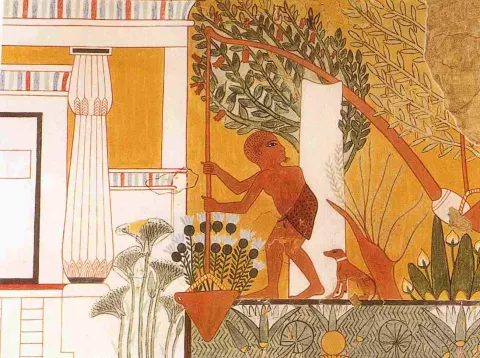
However, in successful years the Nile overflowed during the summer months and flooded the Nile valley. The irrigation system sent river water along short canals to nearby fields. Earthen dikes were made to divide the land into plots for each farmer, and a system of canals carried water to each plot. There, farmers used devices called “shadoofs” to lift the water out of the canal to the field for watering of their crops.
Egypt’s main crop was cereals and knowledge about their cultivation Egyptians adopted from the Near East during Neolithic. The main crops planted were two varieties of wheat, spelt and emmer, which were used to make bread, while barley was used for production of beer. The other major product of Egypt was linen which was produced to an extremely high quality. Together with cereals, linen represented Egypt’s main exports in antiquity.
Among other common crops cultivated in Egypt we should mention lentils, lettuce, chickpeas, and onions, while trees provided pomegranates, dates, carob, and a variety of other fruits. Spices and oil-producing plants like sesame also grew widely.
Wine production was another major industry introduced from Asia before 3000 BC, with grapes cultivated in desert oases and in the western Delta.
One of the most profitable industries in Egypt was the production of linen clothing and textiles. It was followed by the cultivation of papyrus, or djet, which came from the marshy lands of lower (northern) Egypt and was used for writing paper, ropes, sails, baskets, mats, and sandals. Papyrus became Egypt's most important trade commodity after gold.
Grape cultivation, winemaking, and commerce in ancient Egypt c. 1500 BC
Trade
Trade
Economy of Ancient Egypt
Trade
According to beliefs of ancient Egyptians, Egypt was a center of the world and a measure of perfection. Therefore, their distant expeditions and commercial relations had a limited purpose, to obtain the scarce or unavailable commodities and were not motivated by adventurism or curiosity.
Trade is documented as early as Egyptian prehistory, both long distance and local trade associated to marketplaces situated along the river.
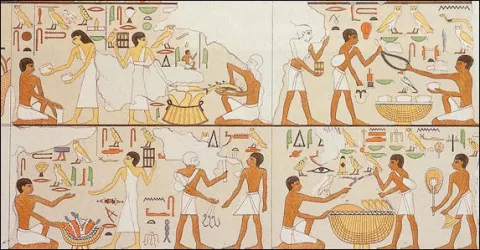
Market trading by means of barter is regarded as the oldest form of trade. Paintings and reliefs in Old Kingdom tombs display marketplaces with its buyers and sellers. Sellers are usually shown sitting either on the ground or on low stools, calling out their goods, while the buyers are shown standing, frequently carrying a shopping bag slung over the shoulder, responding with what they could offer in exchange.
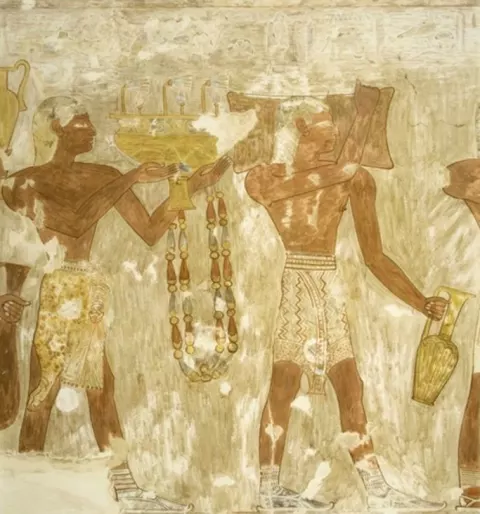
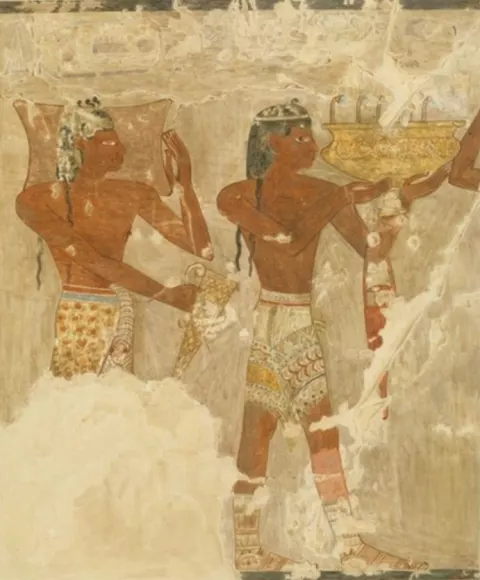
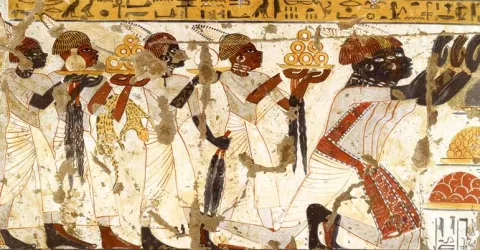
The Kefti (Minoans) bringing tribute to Egypt. The tomb of Rekhmire, Governor of Thebes, and Vizier during the reigns of Tuthmosis III and Amenhotep II – 18th dynasty, c. 1400 BC
The Kefti (Minoans) bringing tribute to Egypt. The tomb of Rekhmire, Governor of Thebes, and Vizier during the reigns of Tuthmosis III and Amenhotep II – 18th dynasty, c. 1400 BC
At the Egyptian market it was possible to provide staple foods and goods such as bread, beer, fresh or dried fish, meat, fruits, and vegetables. The goods offered in exchange included leather or rush sandals, large fans for fanning fires, walking sticks with ornate knobs, pieces of furniture, and headrests. There was also possible to find objects made of copper, such as mirrors, fish hooks, and chisels as well as salves and oils.
All external trade was a royal monopoly and regulated by the king’s decisions which commodities should be traded with foreign lands. That measure limited the development of extensive private commercial enterprise and placed the external trade largely in the hands of foreign traders. Purpose of the foreign trade was to obtain rare, exotic goods and the lacking raw materials. The main Egyptian export products in such trade were grain, gold, linen and papyrus, as well as other finished goods including glass and stone objects. The government brought measures to protect trade caravans by establishing fortifications at oases and providing patrols along borders, frontier roads and at trading centers.
Commercial zones
Trade
Commercial zones
Three main commercial zones of interest were Nubia, Punt and Syria/Palestine. Although the Egyptians also had trade relations with some northern people, particularly the inhabitants of Crete and other Aegean islands, their contribution to Egyptian economy was less important. Apart from Nubia, which could be reached by river Nile, other locations were available only by sea. That circumstance served as a powerful incentive for development of skills necessary for building a merchant fleet and navigation by sea. The expertise of Phoenicians and ancient Greeks were thereby of crucial importance for Egyptians.
Nubia was the destination of the Egyptian expedition from the earliest times. Elephantine (present day Aswan) became a trading center where Nubians exchanged their goods and those from the southern tribes for Egyptian commodities. There Egyptians acquired granite, semi-precious stones, various exotic products from the south and gold. During the Middle Kingdom, the land came under control of Egypt and trade was replaced by tribute gifts. The tombs of various officials at that time display the splendid tribute from Nubia which included gold rings, bars, gold dust in sacks, jewels, and ebony products as well as panther skins, ostrich feathers, ostrich eggs, monkeys, panthers, giraffes, dogs, and cattle.
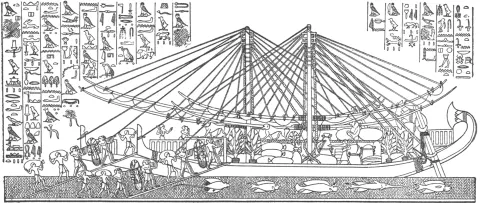
The mysterious and yet unidentified land called Punt was a source of incense and myrrh for their temples. The Egyptians sailed along the west coast of the Red Sea to reach this land and the most famous expedition was launched and registered during the reign of Queen Hatshepsut (b.c. 1508 BC). The walls of her temple at Deir el-Bahri display Egyptian envoys trading with the people of Punt through barter, exchanging beer, wine, meat, and fruit for myrrh trees packed in baskets for planting in Egyptian temple groves, ebony, ivory, leopard skins, baboons, and cattle.
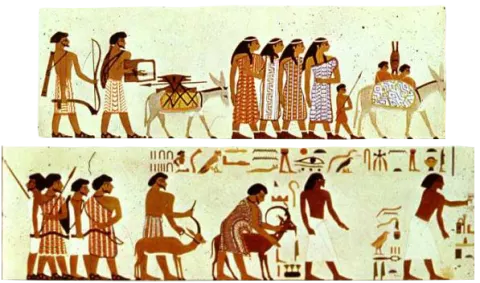
The arrival of an Asiatic trade caravan as depicted on a mural in the tomb of Prince Khnumhotep III at Beni Hasan, circa 1890BC.
Through Syria the Egyptians obtained good quality timber, the cedar wood which was brought from hinterland and had a widespread use in Egypt that generally lacked wooden materials. They also obtained various other goods such as copper, silver, semiprecious stones, and iron. In turn, Egypt provided the Asian market with gold on which it had monopoly and other domestic luxury goods. During the period of New Kingdom (1552-1070 BC), the pharaoh was able to acquire some of these requirements through military booty or foreign tribute. Various products depicted in tomb scenes at the time such as gold and silver vessels, precious stones, and horses, carriages, musical instruments, weapons and others derived from Syria.
During the New Kingdom (1552-1070 BC) trading relations with the inhabitants of the Aegean Islands were evidenced in the tombs of Eighteenth Dynasty. The wall scenes depicts Aegean people bringing tribute to Egypt in gold, silver, precious stones, copper, bronze, ivory and distinctive metal vases of various shapes. Described as “Men of Keftiu” and “Peoples of the Islands in the midst of the Sea” it is generally accepted that they were envoys from Minoan Crete and other Aegean Islands ruled by Crete.
Some expeditions were also sent to the Sinai Peninsula to mine turquoise and copper.
Under the Greeks and Romans Egypt continued to thrive thanks to the improvement of irrigation system and construction of new roads and canals, such as that which joined the Nile to the Gulf of Suez.
Description of trading expeditions in historical sources
Trade
Description of trading expeditions in historical sources
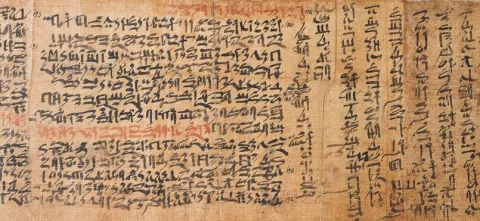
Description of some foreign expeditions survived in autobiographies of certain Egyptians. Probably the most famous is that of the Old Kingdom (2635-2155 BC) governor of Upper Egypt, Harkhuf, who led four expeditions to Nubia and which is carved on his tomb wall at Aswan. Several other stories also provide information about voyages, expeditions, and encounters with other peoples and places.
“The Story of Sinuhe”, for example, is an autobiographical text preserved in two papyri in Berlin which is related to the events in the life of the court official Sinuhe. The “Story of Wenamun” recounts the adventures of a royal envoy sent abroad to obtain timber for the great god’s sacred bark.
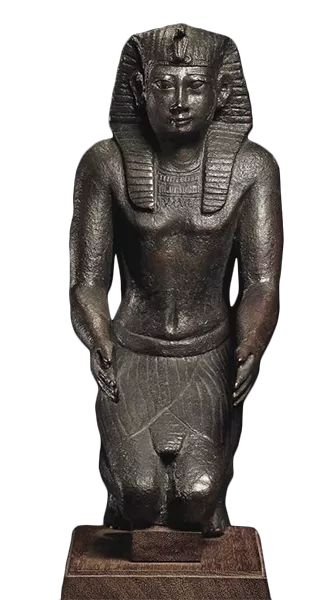
The longest expedition in the Egyptian history was circumnavigation of African continent initiated by pharaoh Necho II (r. 610-595 BC). The voyage was conducted by Phoenicians in his service and lasted for three years, starting from the Red Sea, going around the Cape and then returning by Gibraltar. Description of this adventure was made by Herodotus (484 – 424 BC), a famous Greek historian in his work “The Histories”.
Manufacturing industries
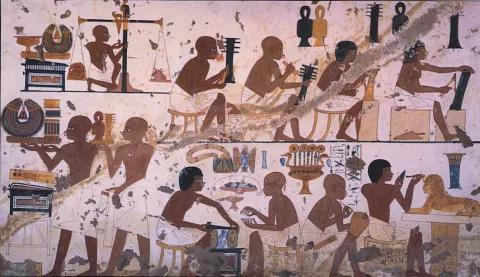
Manufacturing industries and workshops attached to government institutions and temples, processed raw materials like wood, stones, metals and textiles, and manufactured various products ranging from linens, pottery, bricks, weapons, furniture, jewelry, perfume to ships and architecture. Carpentry, painting, stonemasonry and pottery-making were classified among the oldest crafts, while sculpting and gold smiting were known as particularly lucrative.
Egypt was rich in minerals and resources such as granite, limestone and sandstone, copper, gold, tin and gems. It also had alabaster, turquoise, malachite, emerald, carnelian, amethyst, and jasper. Gold was one of the most precious substances for Egyptians as they thought it was a divine metal that ensured eternal life. Silver was imported from outside, but it never became as popular as gold. Lapis lazuli came from Afghanistan. Copper was scarce in Egypt and imported first from mines in Sinai, and later from Cyprus and Syria.
Metals were state monopolies and management of mines and quarries was under supervision of high state officials. Mining operations were extremely complex and accompanied by military which supervised the transportation of hundreds of workers with logistics to particular destination. After the mining mission was completed the ore was transported to state or temple workshops were it was refined and the metal could be worked.
The ancient Egyptians were first to develop a science of extracting and transforming various metals. They used quicksilver to separate silver and gold from the original ore. The product of this process was a black residue for which they thought it has magic power and that contain component required in transmutation of inferior metals into gold. The art became known as Al-Khemia or alchemy.
Transportation
Throughout the history of Egypt, the river Nile also had a prominent role as the main means of communication thought the Valley. The overland transport always had shortcomings in comparison with that of water in terms of suitable means of transport and time effectiveness.
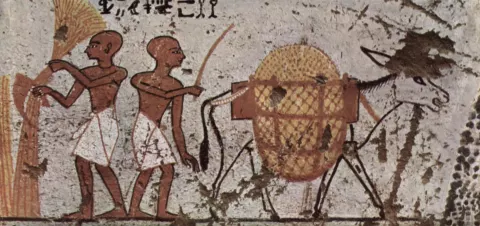
For longer destinations and transport of heavy burdens, the Egyptians usually used donkeys. Camels were by its nature more enduring and faster than donkeys, and although they were known in ancient Egypt for a long time, they became a significant mode of transport only after the Persians brought them in larger number (525 BC). The horses and the wheel were brought in Egypt by Hyksos (c. 1600 BC), but the use of horse-drawn chariots remained the privilege of the most powerful layer of Egyptian society.
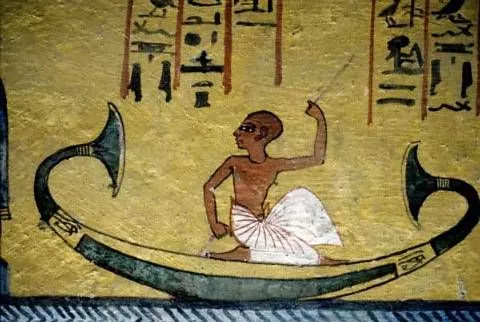
Therefore, ships and boats were the main means for transport of people and commodities in Egypt. The River Nile has provided favorable conditions for navigation. Boats sailing to north relied on the current, while those sailing south could use the wind and oars. Consequently, the ancient Egyptians developed many types of boats – some of them were intended for fishing and travelling, while other were designed for carrying cargo or for war purposes.
The oldest type of vessel, called the “skiff”, occurred as early as 4000 BC. It was a simple form of vessel made of papyrus reeds that were tied together and steered with oars and poles. Because of its fragility it was used only for short distances, and mostly by fishermen and hunters.
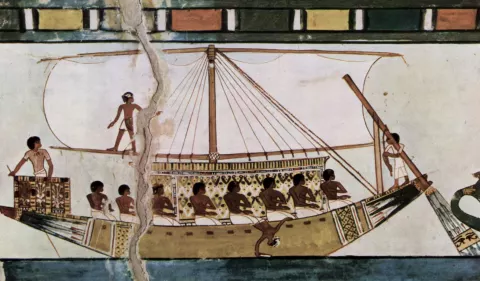
The larger and more stable boats were made from domestic acacia wood and cedar imported from Lebanon. These ships had a huge sail in the middle of the boat and a large rudder oar at the back of the ships. Some examples of a large cargo ships were able to carry giant stones weighting as much as 500 tons.
In addition to using river transport, the Egyptians also developed maritime fleet that sailed as far as Byblos on the Syrian coast and along the Red Sea coast to the mystic and unidentified land Punt. Some of these maritime ships are depicted in scenes at the Temple of Queen Hatshepsut at Deir el-Bahri. According to images, these were vessels about sixty-five feet in length, fitted with oars and large sails, with thirty rowers each.
15 lives in this room
More lives in this room
- Sekhem-Ka c. 30th century BC
- Ti c. 25th century BC
- Hekanakhte c. 20th century BC
- Montuwosre c. 20th century BC
- Senebtysy c. 18th century BC
- Pabes c. 13th century BC
- Mibtahiah of Elephantine 476-412 BC
- Gaius Peticius 1st century BC
- Marcus Julius Alexander 1st century
- Nicanor 1st century
- Aelia Isidora 2nd century
- Aelia Olympias 2nd century
- Julia Crispina of Egypt and Judea 2nd century
- Minnakhte 2nd millenium BC