Museum / Rooms / China's Treasure Fleet
Room · 5 chapters · 1 lives
China's Treasure Fleet
Almost a century before the Europeans even began Age of Exploration the largest fleet of the world had already been travelling and exploring Western Pacific and the Indian Ocean as far as Africa.
Who was the initiator of these voyages?
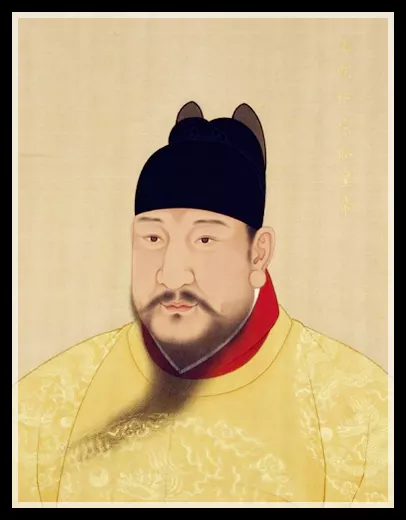
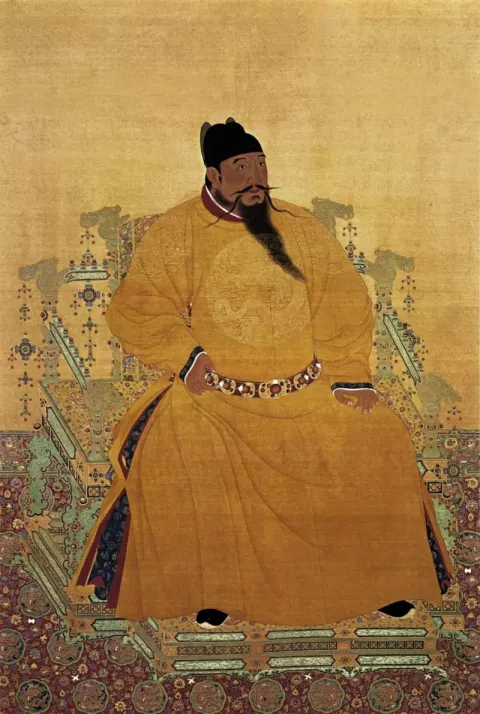
The originator of these voyages that were incomparable in history was a third ruler of the Ming dynasty, the Emperor Zhu Di, also known as Yongle, remembered as a ruler of an extraordinary energy and colossal visions. The fleet was commanded by his close confident, Zheng He, a 35 years old Muslim court eunuch who thereby reached the highest rank ever for a eunuch in Chinese history.
Purpose of voyages
The purpose of the fleet which launched seven voyages in the period between 1405 and 1433 was to impose Chinese prestige “to the four quarters ... as far as ships and carts would go and power of men would reach”. In reality, the voyages represented a mixture of exploration, diplomacy and business, and their aim was to assure both peace and trade through establishment of China as the main Asian power.
Treasure fleet
Treasure fleet was the largest fleet that the world has seen up until the 20th century and embodied the heyday of China's technological achievements. It was comprised of 300 vessels of various size and equipped with about 30,000 people.
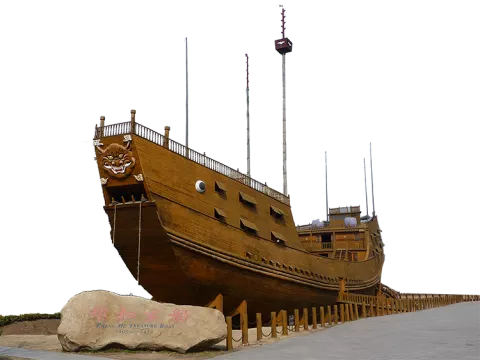
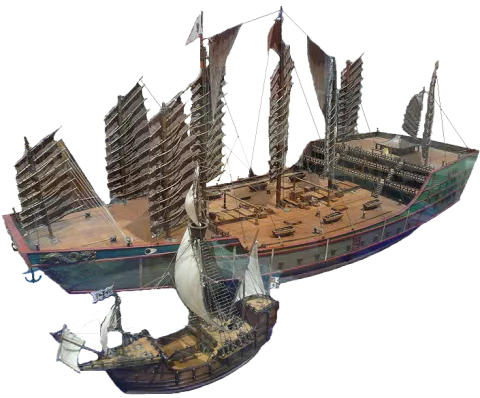
The fleet’s largest ships, allegedly over 400 feet (122 meters) long and 150 feet (50 meters) wide, called “Baochuan” were the largest wooden ships ever launched. Most of the smaller crafts in the fleet where larger than ships on which Columbus discovered America.
Why did the voyages end?
With the death of Yongle Emperor in 1424 ended a cosmopolitan spirit of Chinese policy and the great maritime adventures. During the reign of new rulers Confucian court advisers who traditionally opposed external trade and considered agriculture the foundation of the nation became extremely powerful and pushed China into centuries long isolationism. Zheng He’s documents were confiscated and destroyed as “deceitful exaggerations of bizarre things far removed from the testimony of people's eyes and ears”.
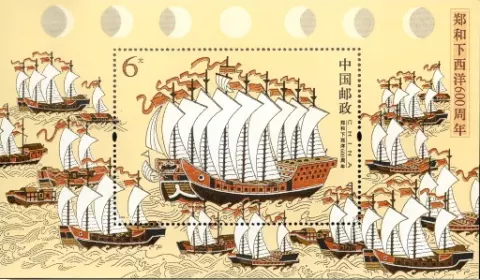
A commemorative stamp issued on June 28, 2005 marking the 600th anniversary of Zheng He’s voyages.
Even though China did not took a step toward Europe, their encounter was one of the historical inevitabilities which began with the Portuguese breakthrough in the Indian Ocean at the end of the 15th century.
Chapters
- China's Age of Discovery
- Zheng He - the Commander of the Fleet
- The Treasure Fleet
- Voyages
- The End of the Age of Exploration
China's Age of Discovery
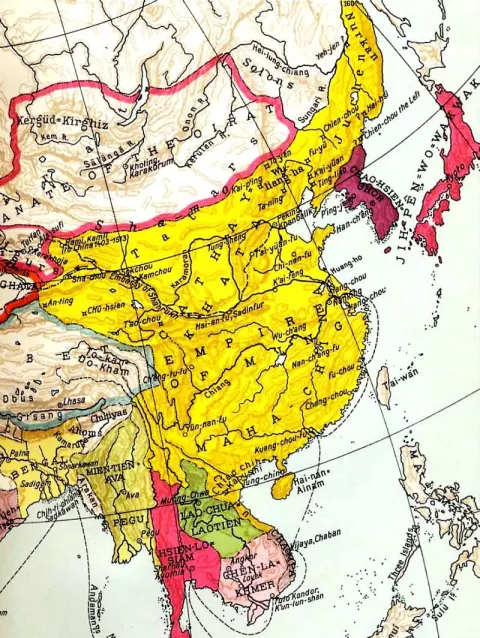
In the first half of the 15th century, almost a century before the Europeans began Age of Exploration marked by the adventures of Christopher Columbus and Vasco de Gama that subsequently led to discovery of the New World and India, a large fleet of Ming's China already had been travelling and exploring the Indian Ocean and Western Pacific, as far as Africa.
The originator of these voyages that were incomparable in history was a third ruler of the Ming dynasty, the Emperor Zhu also known as “Yongle” (meaning “perpetual happiness”), a man of extraordinary energy and colossal visions. In memory of the reign of the ancient Tang dynasty, he wanted to reestablish China's prestige and influence, and revive the concept of the “Middle Kingdom” with China in center of the world and its emperor the ruler of “Tian Xia”, or “all under heaven”.
His reign was therefore remembered by great achievements as the construction of the magnificent Forbidden City and Grand Canal, besides hundreds of temples and palaces along the Empire. But, his most impressive legacy was foundation of the largest fleet that the world has seen up till 20th century. In general terms, purpose of the fleet was to bring order “to the four quarters ... as far as ships and carts would go and power of men would reach”. In reality, voyages represented a mixture of exploration, diplomacy and business, and their aim was to assure both peace and trade through establishment of Chinese imperial presence as the main Asian power.
Zheng He - the Commander of the Fleet
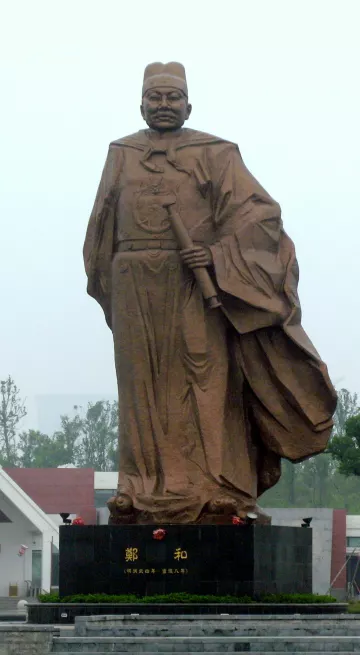
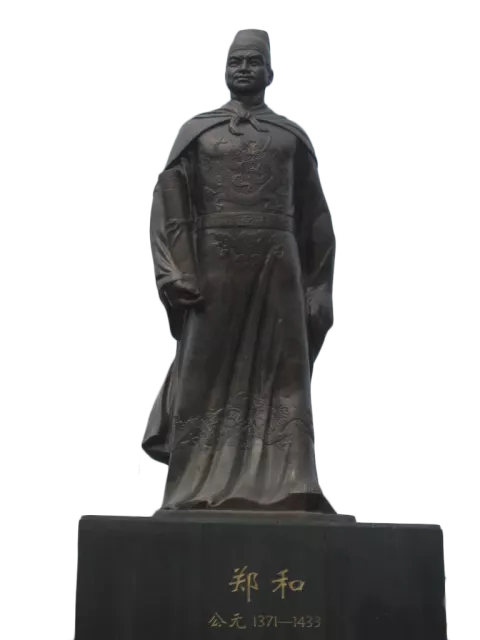
In 1403 an order for construction of the fleet was released. The Emperor's close confidant, Zheng He was put in charge for construction, as well as for commanding of the future fleet. It was a peak of his career, a meritorious reward for his loyal service and contribution to the Ming dynasty. Only 35-years old, Zheng He achieved the highest rank ever for a eunuch in Chinese history.
But, the unusual life story of this talented man starts 20 years ago and it is placed in the city now called Jinning, in Yunnan province. Born in 1371 in a family of Muslim origin, with father and grandfather known as “Hajji”, the honorific title that marked pilgrims in Mecca, Zheng He was named “Ma He”, a Chinese version of Muhammad. In 1381, during the invasion of rebel forces of the future Ming dynasty, his family was executed while Ma He was captured, castrated and turned into eunuch slave. Then he was sent to Beijing and assigned to the household of 21-years old Prince Zhu Di, the future Emperor Yongle. The years that followed, Ma He used to improve himself in learning, as well at fighting and military tactics as the best way to come to the fore. Growing up in a skilled and educated man, with impressive physiognomy – seven feet tall and with “a voice as loud as a huge bell”, Ma He soon gained the trust of the young Prince. His ingenious and devotion were additionally forged on the battlefield, fighting side by side with an Emperor and supporting him in conquering the throne. Due to his contributions, the Emperor assigned him an honorific name “Zheng He”, and appointed him the General of the largest fleet in the history – the “Treasure Fleet” after the ascent to the throne.
The Treasure Fleet
Treasure Fleet
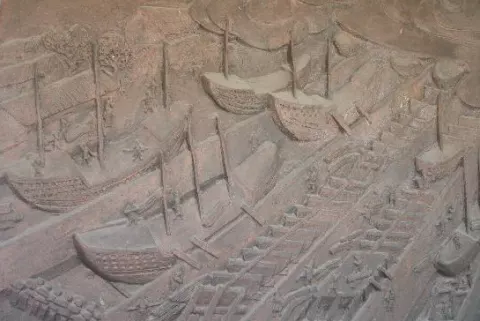
By the beginning of the Ming dynasty, China had reached a peak of naval technology in the sphere of navigation, naval architecture and propulsion undisputedly representing the supreme maritime power in the contemporary world. Its Armada therefore had embodied century’s long development of domestic and foreign inventions and represented the heyday of China's technological achievements.
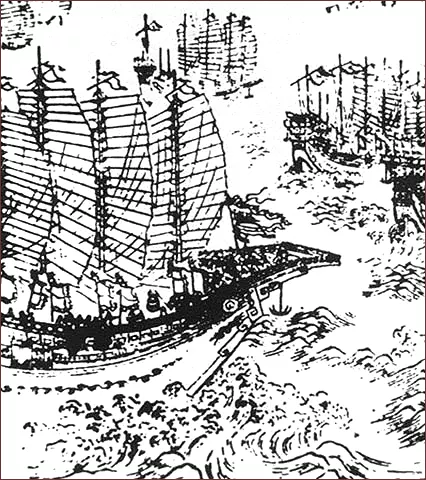
The fleet under Zheng He’s command was named “Treasure Fleet” due to the largest vessels known as “Baochuan” or “treasure ships”. It contained about 300 vessels of different size. Although scholars actually disagree on the actual size of “Baochuan” ships, they have been indisputably the largest wooden ships ever launched.
The largest and most impressive ships were allegedly over 400 feet (122 meters) long and 150 feet (50 meters) wide, they had 9 masts, 50,000-square-foot main decks, and displacement of at least 3,000 tons. The Santa Maria, Columbus's largest ship was, in comparison, 90 feet long and 30 feet wide, with a crew of 90 men. In addition, they were escorted by the swift "galloping-horse ships" 370-feet long and eight-masted, supply ships, water ships which carried fresh water for the crew, troop transports ships and 180-foot war ships for offensive as well defensive needs. The fleet indeed represented an unseen visual spectacle. In the Ming contemporary account the following is written: "The ships which sail to the Southern Seas are like houses.
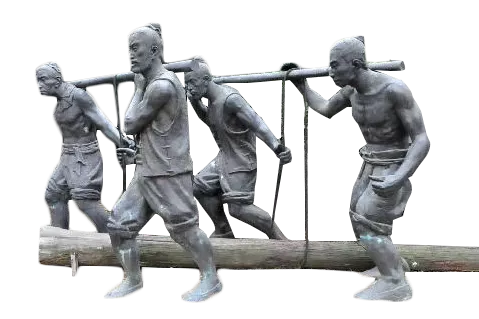
When their sails are spread they are like great clouds in the sky". Furthermore, they were equipped with about 30,000 people who actively participated in the expeditions. Besides sailors and marines, the ships were manned by seven grand eunuchs and hundreds of officials, 180 physicians, herbalists, astrologers, geomancers, builders and repairmen as sail makers, blacksmiths, carpenters, tailors, then diplomatic specialists, soldiers, scholars, interpreters and merchants. The ships carried more than a million tons of Chinese silk, ceramics, and copper coinage to be exchanged for other commodities in the ports on their way.
In 1405 construction of the fleet was finally completed. It was equipped with technological achievements of which some have been widely used in China 1,000 years before their introduction to Europe. The compass, invented in the 11th century, was used for navigation which was further enhanced by using of printed manuals for navigation by the stars. The invention of the watertight compartments should prevent the ship to sink, and enabled the storage of water and fresh fish catches for crew and animals.
Their sternpost rudder represented the first steering system for a ship. The rudder, a movable plate at the stern, made it possible to steer large ships with heavy loads and was used to navigate close to shore, in crowded harbors and narrow channels. Also, they used several masts and the redesigned the basic square sail with the fore-and-aft rig that allowed the ship to sail into the wind. The ships communicated with one another during the voyages through the use of flags, lanterns, bells, carrier pigeons, gongs and banners.
Voyages
An object of seven voyages which were launched in the period between 1405 and 1433 was "Xi Yang", the term which implied the Western Ocean.
During these voyages, Zheng He as a naval commander had faced a number of challenges in order to obtain a balance of power in Asia. He imposed and collected a tribute, negotiated trade pacts, installed the rulers and fought pirates.
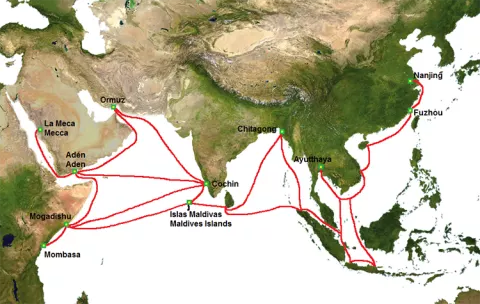
The destination of the first voyage (1405-1407) which was comprised of 62 ships was Calicut, a major trade center on the southwestern coast of India. The fleet's first port of call was Viaya (Vietnam), from there they went to Java (Indonesia), Malacca and Semudera (Sumatra) and then headed west across the Indian Ocean to Ceylon (Sri Lanka) and finally reaching Calicut. In 1407 the great fleet sailed again going as far as Ceylon stopping in Champa, Java and Siam (Thailand). The third voyage (1409-1411), like the first, for the destination had Calicut in India and was comprised of 48 ships. In order to facilitate the trade and storage of goods, Zheng He had established entrepots and stockades along their route. It was also a hint of future travels which went even further.
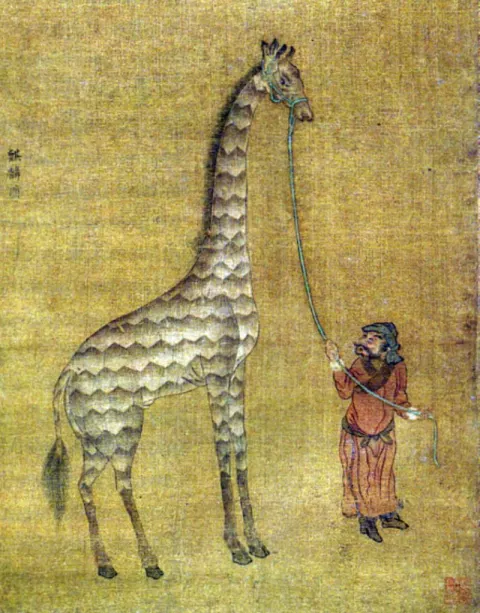
Giraffe brought from Medieval Somalia to China as a gift for Emperor was interpreted as the mythical Chinese creature, the „qilin“ or unicorn, a symbol of just government
During the fourth voyage (1413-1415) the fleet visited Arabian Peninsula and reached the Horn of Africa, making port calls at Hormuz – known as a city of amazing wealth and goods, Aden, Muscat, Mogadishu and Malindi. A number of exotic goods and animals are brought to China, especially from Africa which was considered China’s El Dorado. The giraffe was particularly well accepted and interpreted as the mythical Chinese creature the "qilin", or unicorn, a symbol of just government. The fifth (1417-1419) and the sixth (1421-1422) voyage reached the Persian Gulf and the east coast of Africa collecting tribute from as many as thirty different states and principalities and returning to China in 1422.
The End of the Age of Exploration
Two years after the sixth voyage was launched, the Yongle Emperor, a main sponsor of voyages died. His death in the same time marked the end of a cosmopolitan spirit of Chinese policy and the great maritime adventures.
He was succeeded by his son, the Hongxi Emperor (r. 1424-1425) who was by the nature much more conservative and inclined to Confucian court advisers instead of imperial eunuchs. The Confucian elite were traditionally against the external trade and considered agriculture the foundation and sustenance of the nation. Although his reign didn't last long, the era of China's exploration was soon over.
Beside the change in government and its worldview, such a decision was mainly motivated by the political and economic reasons – the China's borders were increasingly endangered by the Mongols and other Central Asian people, and it was necessary to repurpose the funds and secure the borders
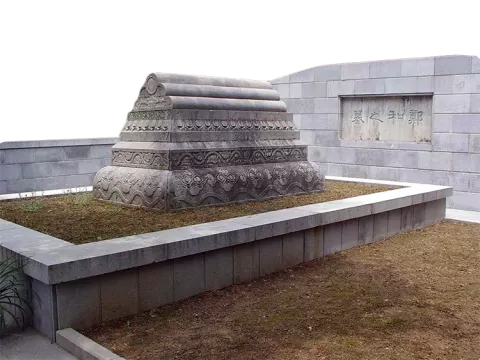
During the reign of his successor, Zhu Zhanji, one last voyage was launched (1431-1433) as the last testimony of China's curiosity for the outside world. On its return Zheng He, the main protagonist of these epic voyages died. According to the legends, he was buried at sea while the crew returned only a braid of his hair and his shoes to Nanjing for burial.
After a brief and shinning opening to the world, China soon turned to a century long isolation. In 1436 an imperial decree banning ocean-going vessels was issued, and by the end of the 15th century, ships couldn't be built with more than two masts. Trade turned towards the internal. These decrees were in a later period enhanced by the practice called "damnatio memoriae", which sought to erase from the collective memory reminiscence of these great expeditions damning them as "deceitful exaggerations of bizarre things far removed from the
testimony of people's eyes and ears". Despite the best efforts, the written testimonies nevertheless survived and were preserved in the writings of shipmates Ma Huan, Gong Zhen and Fei Xin.
Even though China has not taken a step toward Europe, their encounter was one of the historical inevitabilities. With the expeditions of Bartholomew Dias, Vasco de Gama and Ferdinand Magellan the door of the Asian mainland and the rest of the world were finally open to the Europeans.
The question remains what would the world history look like if the Age of China's Exploration wasn't so abruptly and irrevocably terminated?
A commemorative stamp issued on June 28, 2005 marking the 600th anniversary of Zheng He’s voyages.