Museum / Rooms / Benedetto Cotrugli
Room · 4 chapters
Benedetto Cotrugli
“Father of Modern Accounting”
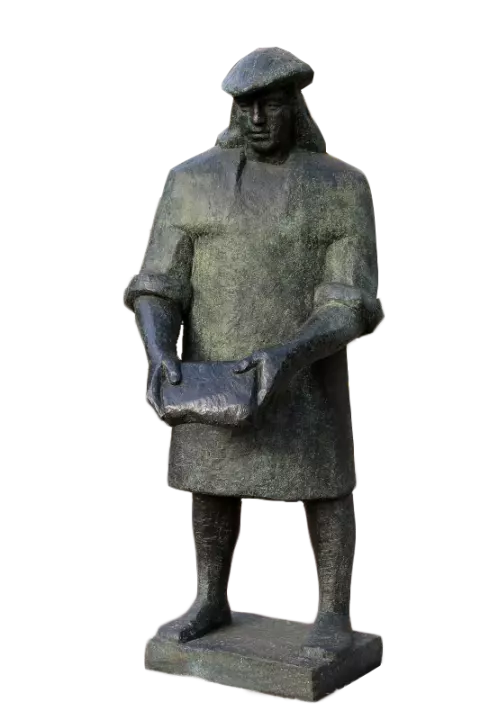
Considered to be one of the most famous products of “the Pearl of Adriatic”, Benedetto Cotrugli was the 15th century merchant, diplomat, and humanist known as the author of the oldest known book on entrepreneurship and double-entry bookkeeping.
His “Art of Trade” (“Il libro dell' arte di mercatura”) written in 1458 is one of the most influential economic writings in history which earned him the title “the father of modern accounting”.
The basics of bookkeeping methods described by Cotrugli in Art of Trade form a vital part of accounting practice to this day, while his vision of an educated and ethical business leader, who need to work for the general interest of the whole society doesn’t stop to inspire all those entrepreneurs who thrive to achieve their fullest potential and to contribute meaningfully to economic and social development of the their community.
Chapters
Biography
Benedetto Cotrugli lived and worked in the time of the Renaissance, one of the most innovative periods in the history of mankind. The period brought a new view of the world, which gave a strong push to the development of art, science, culture and economy. It was a period of great importance for the development of prosperity of both individuals and the community.
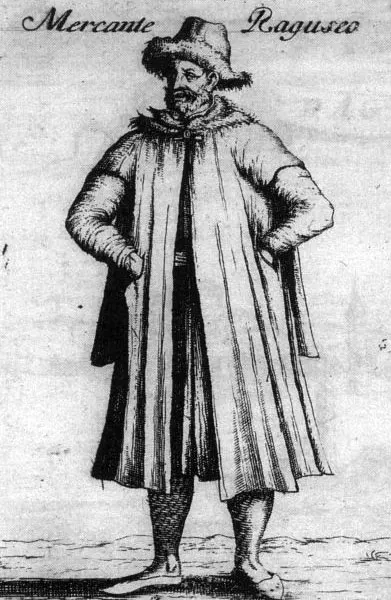
The Cotrugli family, originally from Kotor, a coastal town in today Montenegro, have moved to Dubrovnik in the mid-14th century. Stimulating environment favorably affected the people who had a business spirit, and the Cotrugli who were engaged in trade, while the surplus of capital invested in land and properties, very quickly adapted and rose in society. Their material status opened to them the world of the Fraternity of St. Anthony, also known as Antunini, which gathered the most significant and wealthiest stratum of bourgeois society. Although they were excluded from the nobility class and participation in the Republic’s political life by the enclosure of the Grand Council in the 14th century, through social and economic mightiness they de facto lived a life of nobility.
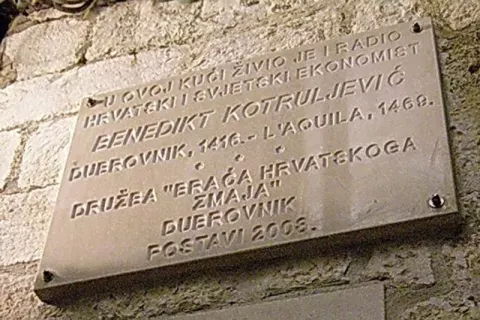
Benedetto was born in a family of respectful merchant and diplomat in 1416 in Dubrovnik, at the peak of its cultural and economic prosperity. His father, Jakov Cotrugli was an accomplished merchant who traded with Bosnia and Serbia, and leased the salt works in Apulia from the Neapolitan kings. Versed in the economic conditions, he also performed diplomatic missions in the services of the Kingdom of Naples and the Republic of Dubrovnik. Owing to Jakov, numerous privileges for the Dubrovnik’s merchants were obtained by the Neapolitan ruler. The contribution to the welfare of the Republic served as an additional source of family’s prestige.
Affiliation to a family which enjoyed such a widespread reputation, enabled Benedetto to gain excellent education, first in Dubrovnik and then in Ferrara, and later on at the well-known universities of the time in Bologna and Naples. Apart from studying philosophy and law, he gained insights in the most important developments of the time. Following his father’s death, he was forced to return home in 1436. Inheriting family’s business and capital, he independently engaged in trade. At the age when young men enter into marriage, he married Nikoleta (in 1444), a member of one of the most powerful Antunin’s families. The marriage provided him with eleven children, and an additional social and economic support, which was a highly important factor for his profession.
Business Activities
Benedetto’s business activities, known from sources and trade books, reflect the spirit of time in which he lived and acted. An important feature of the medieval economy was lack of any specialization in trade business. Thus, one person was usually involved in a multitude of business activities as the wholesale and retail, financial and credit transactions, tax leasing, money minting and so on, which were all closely related. Also, the contemporary merchants weren’t specialized in any particular trade merchandise and instead they traded in bulk of goods ranging from grain, salt, cloth, leather and skin, timber, metal to precious spices as cinnamon, pepper and saffron. Therefore, Benedetto’s business activities didn’t contrast to common practice.
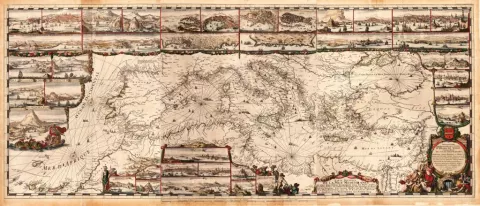
During his lifetime, Benedetto travelled widely, visiting Italy, Sicily, Northern Africa and Catalonia, which enabled him to learn about economy and business and to upgrade his own way of doing business. Eventually, he expanded his business ventures to the Aragon Kingdom, which dominated the western Mediterranean and in 1442 included Kingdom of Naples. The Aragon’s rulers especially privileged the citizens of Dubrovnik, protected their ships and compensated the damage in order to weaken the Venetian Republic which represented an obstacle to their expansion eastwards.
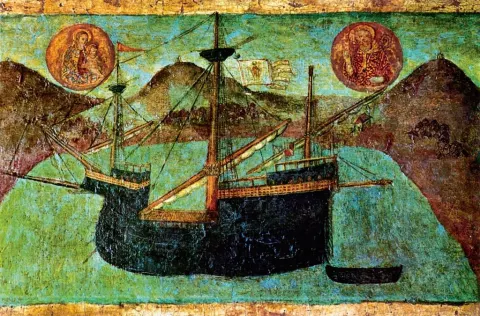
Attracted by privileges and simultaneously recognizing the profitability of trade in Spanish wool, Benedetto operated in Kingdom’s province of Catalonia and its cities Barcelona and Tortosa. The historical sources from Catalonia, which date back to that time, mention Benedetto as the first merchant from the Dubrovnik in Barcelona. Along with the Catalonia, he also had business interests in Italy and in Dubrovnik trading in salt, saltpeter, grain, wool and other commodities, possessing a share in ships necessary for trade transportation. Using a
part of the acquired capital he provided a credit for different business ventures.
From 1448 to 1453, Benedetto led his business from Dubrovnik, and possibly from Naples. In 1451 he definitely left his hometown and went to live Naples, where he would spent the rest of his life. That is, perhaps, the most productive period in his life. In 1458 the Senat of the Dubrovnik Republic named him consulate general in Naples. At the Naples Court, which was Italy's center of art, culture and literature, as well as the cultural meeting point of Italy and Spain, Cotrugli was in
service of the King Alfonso, and then his son Ferdinad, as their diplomat. Near the end of life, he was the manager of king’s mints in Naples (1460-1468) and Aquila (1469), as his father Jakov was.
He died in Aquila in 1469, at the age of 53.
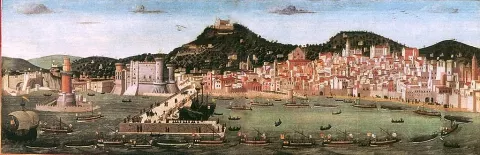
Benedetto Cotrugli as humanist
Cotrugli's inheritance witnesses not only about his genius for business, but his passion for the intellectual and cultural wisdom. He firmly believed only a man educated to perfection can be a perfect entrepreneur. His libraries in Dubrovnik and Naples contained the most famous works of Classical Antiquity, Christian theology, philosophy, Judaism and Arabic culture.
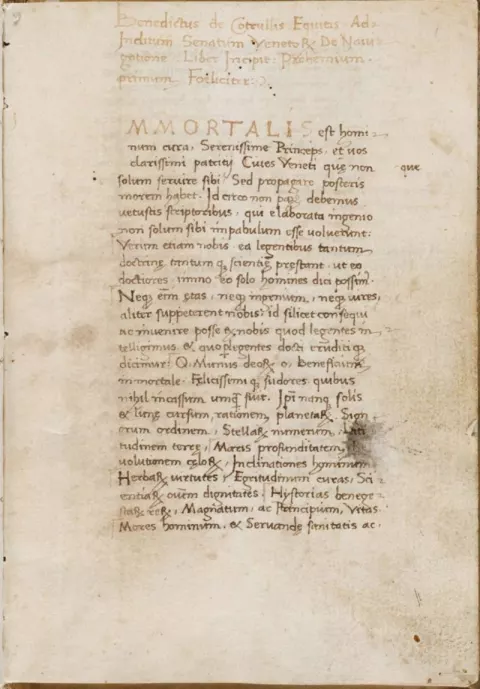
The width of his knowledge is best portrayed in the following works, which manifest his intellectual curiosity “On choosing a wife” ("De uxore ducenda") dedicated to nobleman Vukša de Babalio; “On the nature of flowers” ("Della natura dei fiori") both of which are lost, and “On sailing” ("De navigatione"), incomplete work which he devoted to the Venetian Republic for its great merits in maritime affairs. The manuscript is kept at the Yale University’s Beinecke Rare Book and Manuscript Library.
But, his most famous and controversial work is certainly “The Art of Trade” ("Il libro dell' arte di mercatura"). It is considered to be the oldest known book on entrepreneurship and double entry bookkeeping. The book reflects the humanistic ideal of acting in the general interest, or as Cotrugli points out, wise people want to bequeath their experience to the written word, so as to sow their wisdom among their offspring. Cotrugli saw it his duty to write about the state of trade and provide valuable guidelines, as it was filled with mess, corruption, vanity and dishonesty. The purpose of his book was not only to describe and improve the way trade was made, but also to build a fine tradesman, educated and moral so as to provide credibility to tradesmen profession. Although aware of the wide acclaim and recognition the book would gain had it been written in Latin, he decided to write it in “lingua volgare e materna”, the Italian language, so that the merchants, to whom the book was primarily dedicated, would understand it better.
Although "The Art of Trade" celebrates merchants as the bearers of economic and cultural changes, and trade as ”the most noble skill” and one of ”the major state symbols”, the true importance of the book lies in its utilitarianism. Cotrugli was the first to provide a systematic overview of the social and economic aspects of trade and suggestions for its improvement. He made it a science and defined it as a skill, or a set of rules which makes legal entities act righteously in the matters of commerce in the purpose of preserving mankind and in the hope of profit.
Given his intellectual curiosity, free spirit, knowledge and wisdom, Benedetto Cotrugli truly represents "homo universalis", the ideal of Humanism.
The Art of Trade
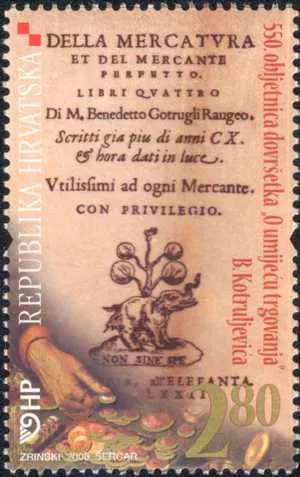
“The Art of Trade”, famous work in which Benedetto presented the principles and methods of double entry bookkeeping as a necessary attribute of trade activity
The book itself went to live an interesting life, which has greatly influenced the perception of Benedetto Cotrugli and the significance of his work.
"The Art of Trade" was written in 1458 at the Serpica castle, close to Naples, where he found shelter against plague, and was dedicated to Frano Stjepović, a merchant from Dubrovnik. In its pages, Benedetto described and explained the elaborate method of double entry bookkeeping, the method that had been in use since 13th century but never theoretically explained, and made it available to mankind.
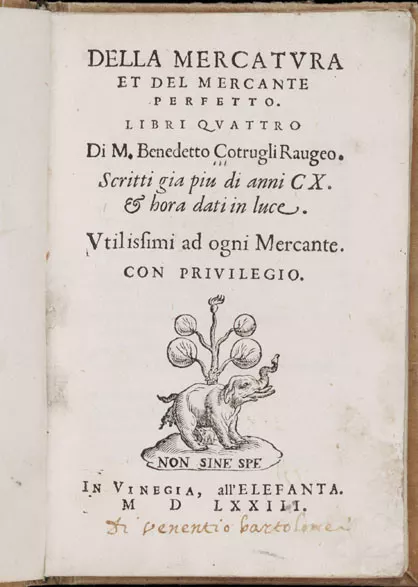
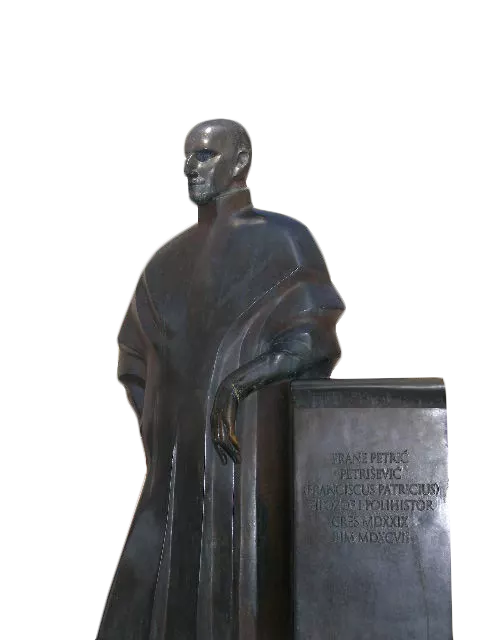
Although he completed his work in mid-15th century, it remained unpublished for over a century. It was finally printed in 1573, after a patriot, Ivan Josipović from Dubrovnik, had delivered it in an unsigned transcript to Franjo Petrić, the owner of "All’ Elefanta" printing office. The book was a major success, and widely acclaimed in 16th and 17th century and was printed in several editions in Italy and in France. However, as it was later discovered, Petrić made significant changes to the original text which was unfortunately in accordance with the editorial freedom of the time.
In addition to correcting the mistakes made in transcript, he changed the original title from "Il libro dell' arte di mercatura" ("The Art of Trade") to "Della mercatura et del mercante perfetto" ("On trade and perfect tradesman"), he dramatically intervened in the content of Chapter 13 which was dedicated to double entry bookkeeping.
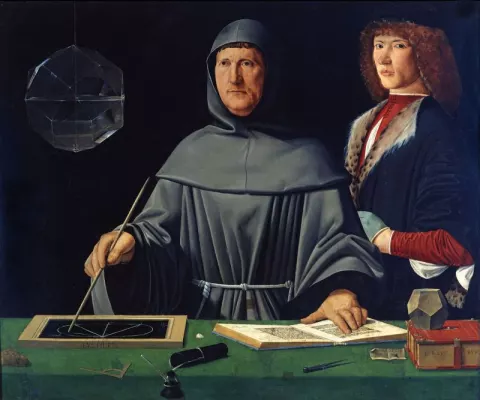
The changes Petrić made in the text, as well as the time distance between the making and printing of the book, made the experts question its originality. Consequently, the credit for introducing double entry bookkeeping went to Luca Pacioli, the author of "Summa de Arithmetica, Geometria, Proportioni et Proportionalita", printed in 1494 and dedicated in one part to double entry bookkeeping. Pacioli wore the title for almost four centuries.
The breakthrough in the interpretation of Cotrugli's importance in bookkeeping happened in 20th century, when Florentine (1485 and around 1500) and Maltese (1475) transcripts were found. These transcripts showed a completely different version of the controversial Chapter 13 from the text which was printed in 1573.
Even though "The Art of Trade" was written in the 15th century its significance is universal as it encompasses numerous aspects which are important today as career orientation, economy of time (time is money), availability and relevance of information, focus on economic and political aspects in decision making, risk avoidance by diversification, necessity for innovation in entrepreneurship, morality and ethics, balancing private and professional life, building reputation, appropriateness of verbal and nonverbal communication and many other.
Keeping in mind his contribution in philosophy, sociology, psychology, and in most part, economy, it is safe to say that Benedetto Cotrugli was a global economist and one of the most prominent representatives of Humanism in general.