No. 700 · dated by century
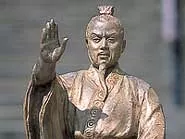
Wang Zhi
Wang Zhi was the most representative Chinese merchant-pirate based in Kyushu in the 16th century.
He had been a wealthy salt merchant in Huizhou for years before he was forced by the Ming court to venture to sea, becoming a merchant-pirate known as Wang Wufeng. The Ming court issued the Haijin (literally: "sea ban") order in 1550 that was a ban on maritime activities intended to curb piracy, but the ban proved ineffective for that purpose. Instead it imposed huge hardships on coastal communities and legitimate sea traders.
Wang Zhi started his maritime career in 1540, when the Ming court relaxed its control over the private maritime trade for a short period. Wang went to Guangdong with several business partners, including Ye Zongman, Xu Weixue and Xie He, and had huge junks built there. Together, they traded in Japan, Siam and other emporia of Southeast Asia with goods purchased in China, such as saltpeter, silks, cotton textiles and rhubarb.
Within five to six years, he rose to prominence among Chinese maritime merchants and was respected by his peers, who called him Wufeng Chuanzhu, or Captain Wufeng. He had several thousand followers and over 300 ships under his command.
It should be noted that Wang’s rise was closely associated with the Xu brothers. Earlier in his maritime career, he had worked for a fellow townsman and prominent merchant-pirate, Xu Dong (Xu Er). He helped the Xu brothers manage routine overseas trader in East Asia. Due to his exceptional abilities in business management and maritime transactions, he was soon promoted to Guanku or financial supervisor for the Xu family on the Shuangyu Islet off the Zhejiang coast and, before long, promoted again, to the position of Gunashao or commander of armed fleet and Liaoli Junshi or councilor for military affairs.
While Wang Zhi was a leading merchant-pirate based in Kyushu in the mid-16th century, it is interesting to note that he never personally led an attack on the coast of South China, pillaging coastal villages and towns; he always remained in the island bases or in Kyushu. Pillaging and burning expeditions were usually led by his partners or followers.