No. 1137
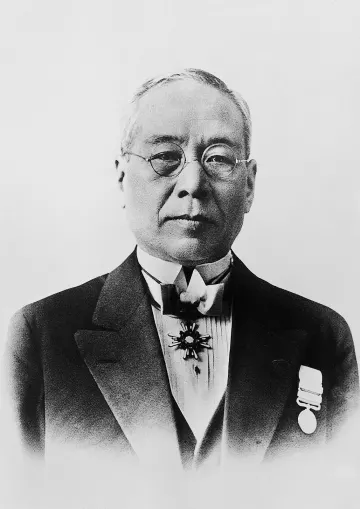
Sakichi Toyoda
Sakichi Toyoda is a Japanese inventor and industrialist. He was born in Kosai, Shizuoka. Son of a poor carpenter, Toyoda is referred to as "King of Japanese Inventor". Sakichi Toyoda is often referred to as the father of Japanese industrial revolution. He is also the founder of Toyota Industries Co., Ltd.
He created a variety of weaving device. The most famous invention is the automatic power loom in which he applied the principles of Jidoka (autonomous automation). Jidoka principle, which means that the machine stops itself when the problem occurs, then became part of the Toyota Production System.
Toyoda developed the concept of 5 why: When a problem occurs, ask 'why' five times to try to find the source of the problem, then put into place something to prevent these problems from recurring. This concept is used today as part of implementing lean methodologies to solve problems, improve quality and reduce costs.
Toyoda’s father was a poor carpenter, his mother a weaver, and he combined their skills by inventing numerous wooden devices to automate weaving, including the first wooden hand loom, patented in 1890, and devices for reeling and winding yarn (1894). In 1893 he opened a factory and sales outlet for his looms, and had his first major commercial success with his invention of a narrow wooden power loom (1896). With technical improvements, within a few years one weaver could operate up to three steam-powered looms concurrently, tripling efficiency while improving textile quality. He invented the circular loom in 1906, and in 1924 he patented a remarkable automatic loom with non-stop shuttle change motion, and the ability to replenish thread supplies without even slowing its weaving speed. In 1926, Toyoda established the Toyoda Automatic Loom Works (now Toyota Industries Corporation). In 1929 the Corporation licensed its Type-G loom for use by Platt Brothers & Co., the British company that was the world's leading textile manufacturer at the time. After his death in 1930, Toyoda Industries Corporation put his son Kiichiro Toyoda in charge of a new auto-making division, now known as Toyota Motor Corporation.