No. 1151
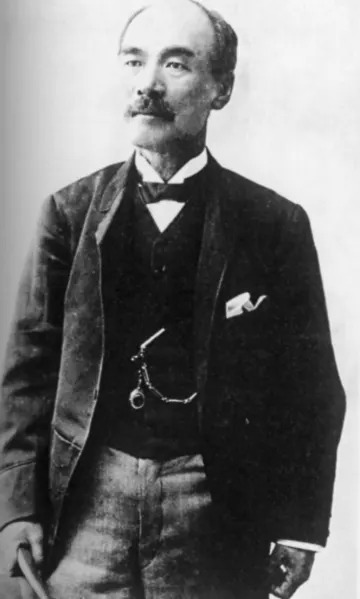
Saihei Hirose
Saihei Hirose was born in 1828 in what is today Yasu City, Shiga Prefecture. In the Japan of those days, it was customary for all the children of a family except the first-born to leave the parental home as soon as they were old enough to do so. Saihei, his parents’ second son, also left home at the age of 11 and was taken into the House of Sumitomo by his uncle, a Besshi Copper Mine employee. Fighting homesickness, Saihei started his life as a salaried apprentice. He was fortunate, however, to be at the Besshi Copper Mine, where he was able to learn all the techniques of mining, refining and transportation, and acquire knowledge about business management, including accounting. He also learned Chinese classics from another uncle, a Chinese classic’s scholar who lived in Kyoto, by a method that resembled today’s correspondence courses. The great leadership Saihei demonstrated later in his life was probably nurtured through such steady efforts.
Saihei became the Manager of the Besshi Copper Mine at the age of 38 and the first Director General at the age of 55. In this post, he commenced his steady effort to solidify Sumitomo’s business foundation. His greatest achievement was the “industrial revolution” of the Besshi Copper Mine. He realized this with the conviction that technological innovation at the same level as in the West was essential in order for Japan, now open to the rest of the world, to be competitive on the world market. He succeeded in modernizing Besshi Copper Mine by employing a European engineer, which was unusual for a mere private company, and by sending Sumitomo employees on training missions to Europe.
At the same time, he also undertook the systematization of business management, clarifying the relationship between the corporate founder and managers, and separating capital from management. Behind this was the belief that a business enterprise did not belong to its owner alone, but to all those who worked in it. He brought this belief and other precepts together, e.g., placing importance on integrity and sound management, and not acting rashly or carelessly in pursuit of easy gains, into the “Rules Governing the House of Sumitomo,” forerunner of the Sumitomo Business Spirit.
Saihei went on to start several new businesses, and contributed to the country’s economic development through his activities in the business community. He established Osaka Shosen Kaisha to modernize maritime transportation and served several terms as Vice President of the Osaka Chamber of Commerce and Industry. Saihei worked so actively alongside Tomoatsu Godai, a central figure in Osaka’s business scene in those days, that Godai used to call Hirose his right-hand and left-hand man.
From the turbulent end of the Edo shogunate to the Meiji period, with drastic economic changes alternating between deflation and inflation, Saihei protected and developed Sumitomo’s business when Japan’s international competitiveness was still weak. The year before his death, he put down his thought into these words: “disobey your master if that is necessary to protect him; this is loyalty.” It was loyalty to the nation and his employer that he embraced throughout his life, determined and steadfast almost in the style of samurai warriors at the end of Edo.