No. 588
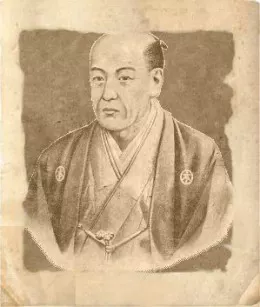
Munehisa Homma
Homma Munehisa, also known as Sokyu Homma and Sokyu Honma, was a rice merchant from Sakata, Japan who traded in the Dojima Rice market in Osaka during the Tokugawa Shogunate. He is considered to be the father of the candlestick chart.
Until about 1710, only physical rice was traded but then a futures market emerged where coupons, promising delivery of rice at a future time, began to be issued. From this, a secondary market of coupon trading emerged in which Munehisa flourished. Stories claim that he established a personal network of men about every 6 km between Sakata and Osaka (a distance of some 600 km) to communicate market prices.
In 1755, he wrote (San-en Kinsen Hiroku, The Fountain of Gold - The Three Monkey Record of Money), the first book on market psychology. The book states that even the market has a yin and yang. There is always a balance or rotation of Yin (bearish) and Yang (bullish) - meaning that the market will always try to find a way to balance itself. Within every bull market, there is a bear market ready to bring balance to the market. Within every bear market, there is a bull market ready to bring balance to the market. This may explain why Japanese candlestick techniques place so much emphasis on reversals, rather than trends.
The book states that it may be safer to trade a position after the market has reacted to the news rather than trading with the news. We should pay less attention to the news events and pay more attention to the human reaction to these news events.
One of the advice of the book is not to talk to people about what you are or about to do in the market. It is safer to only look to the market for direction in what you are going to do. People tend to give bad advice or talk against your position which may affect your actions or give you “cold feet”. If you want to know about the market, ask the market; not your friend or co-worker.
The three monkeys are the “see, hear, speak no evil monkeys”. The meaning of the title is that in order for traders to reach their “fountain of gold” they need to have the same characteristics of the three monkeys.
“See no evil” – when you see a trend, always, consider the opportunity to make money on a reversal.
“Hear no evil” – when you hear news (bullish or bearish), don’t trade on it.
“Speak no evil” – don’t speak to others what you are doing or going to do in the market
Homma is rumored to have made the equivalent of 10 billion in today’s dollars trading in the Japanese rice markets. In fact, he was such a skilled trader that he served as an important financial advisor to the Japanese government at the time and was later raised to the rank of honorary Samurai.