No. 1202
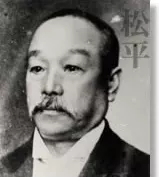
Matsuhei Iwaya
Matsuhei Iwaya was born in 1849 in Satsuma (now Kagoshima Prefecture) and inherited the house of Iwaya in 1869. But since the household goods were burnt down at the Satsuma Rebellion in 1877 Matsuhei went to Tokyo and opened a store "Satsumaya" in 1878 in the Ginza 3 Street to sell kimono fabrics and specialty goods of Satsuma.
From the beginning of Meiji, the paper rolled cigarette, which was a symbol of sophistication at that time, was becoming popular replacing pipe tobacco in big cities like Tokyo; Iwaya started manufacturing cigarettes from 1884 and sold "Tengu cigarette," the paper-roll cigarette with a mouthpiece, named for a comical red-faced goblin of Japanese legend. Iwaya himself promoted the advertisement of cigarettes vigorously, and created his original advertising strategy that was hardly seen in Japan those days: it was newspaper advertisement of paper cigarettes to sell them with premium, which was not common yet in Japan.
His company name was "Iwaya Shokai" and the brand name of cigarette was "Tengu Cigarette": the character was "red tengu," and letters on the package were designed similar with the insignia of Shimazu family, then everything was red as the corporate color was red, and coats Iwaya wore were red, too. He called himself, "Captain of discounters," and rode on a red wagon in Ginza area as if the wagon were an advertising car.
His promotional phrase was "King of cigarette in the Orient" and "Boss of national benefit" and he also publicized his company's prosperity saying, "Don't be surprised; our tax is only 500,000 yen and 30,000 charity men are working in the company!" (500,000 yen was large sum of money in the beginning of 1897's.) He was trying to dominate the industry with provocative advertisement.
Iwaya, a patriotic man, created packages mainly with Japanese style designs like tengu, hawk, Mt. Fuji, and family crests, applying national traits in naming cigarettes. In quality ranking the names were Golden Tengu and Silver Tengu, in cigarette size ranking names were Large Tengu and Medium Tengu. Iwaya had competed the cigarette-sales fiercely by naming his product "Importation Eradicator Tengu," "Patriotic Tengu," "Country Benefit Tengu," and "Happy Nation Tengu."
Printing technique was another important element in enticing people to buy cigarettes. Iwaya united with the printing company founded in 1900 by Enkichi Kimura, and Furuya Ginjiro and succeeded to print exquisite packages and advertising items such as posters and brochures.
However, the private cigarette business by Iwaya July of 1904 after 30 years of blossom by ratification of "Cigarette Monopoly Law" for the procurement of expenditure of Russo-Japanese War.