No. 908
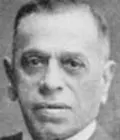
Sir Currimbhoy Ebrahim
Currimbhoy Ebrahim, an Indian Muslim, was born an Ismaili Dawoodi Bohra on the 21st of October, 1840 and was the founder of the Ebrahim fortune. He inherited a business resting upon the trade between Bombay and Zanzibar on the east coast of Africa. He first extended the family business to the export of opium and silks to the Far East (he went to Hong Kong in 1856 and set up E. Pabaney & Co. in 1857 at age seventeen), and then turned to the manufacture of textiles. In 1888 he purchased a group of defunct mills which he dubbed the Currimbhoy Mills; ten years later he acquired the Mahomedbhoy Mills; in 1900 he purchased the Crescent Mills, by which time the business controlled four mills in Bombay.
After becoming an industrialist with mercantile business in Bombay and Calcutta (India), Hongkong and Shanghai (China) and at Kobe (Japan), Currimbhoy Ebrahim was knighted after a donation of 300,000 rupees for a museum commemorating a visit by the Prince of Wales and a contribution towards a statue of the Prince in Bombay.
In 1905 he set up the Currimbhoy Bleaching and Dyeing Works, and finally, in 1915 he acquired the Pearl Mills. Under Currimbhoy’s skilful management these mills yielded very high dividends, and conferred upon him the reputation of being one of the leading industrialists of Bombay. Sir Currimbhoy Ebrahim was a president of the Indian Merchants' Chamber in 1914. He was also a director of a Bombay bank.
Sir Currimbhoy Ebrahim was created a baronet on the 20th of July, 1910. The first baronet died on the 29th of May, 1924. Clause 21 of his will stated: “Lastly it is my special desire that my son Mohamedbhoy on succeeding to the title of Baronet and every succeeding Baronet shall forthwith on such succession adopt the names of Currimbhoy Ebrahim and continue to do so as long as he holds the title”.