No. 1840
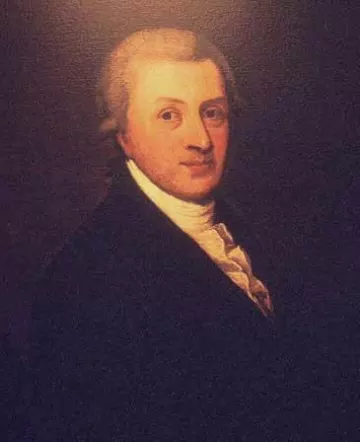
Arthur Guinness
Arthur Guinness was born in 1725 near Celbridge, county Kildare where his father, Richard Guinness, was Land Steward to Dr. Arthur Price, Archbishop of Cashel. Part of Richard’s duties was to supervise the brewing of beer for the workers on the estate and it is probable that young Arthur first learnt the art of brewing from his father. The Archbishop, Arthur’s godfather, left Arthur £100 in his will and with this money Arthur was able to run a small brewery in nearby Leixlip. In 1759, aged 34, he left the Leixlip brewery to his younger brother and set out to try his luck in the capital city of Dublin.
Arthur decided to acquire what was then a small, disused and ill-equipped brewery at St James’s Gate. The lease, signed on 31 December 1759, was for 9000 years at an annual rent of £45. The premises at the time comprised of four acres with a copper, a kieve, a mill, two malthouses, stabling for twelve horses and a loft to hold 200 tons of hay. On 1 December Arthur had entered his signature, as a new brewer, in the Minute Book of the Dublin Brewers and Maltsters Corporation. Within eight years he had risen to become Master of the Corporation.
To start with Arthur brewed ale, but by the 1770s a new drink, a strong black beer called porter, was being exported from London to find favor in Dublin. Arthur decided to brew this new beer himself. He proved extremely successful and in 1799 Arthur made the momentous decision to stop brewing ales and concentrate solely on porter.
Right into his seventies Arthur continued to be active in supervising his business at the Brewery, now assisted by three of his sons. Arthur had married an heiress, Olivia Whitmore, and had 21 children, 10 of whom survived into adulthood. Besides his house in Dublin, Arthur purchased a country house at Beaumont, near Dublin, and was active in public life, becoming Governor of the Meath Hospital and Secretary to the Friendly Brothers of St Patrick. He donated 250 guineas to the Chapel Schools attached to St Patrick’s Cathedral. He was also brewer to Dublin Castle, the seat of government in Ireland.
When Arthur died in 1803, he left a considerable personal fortune of about £23,000 and an extremely flourishing business.