No. 7035
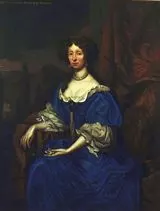
Anne Hamilton
Hamilton, Anne, 3rd Duchess of Hamiltonsuo jure, born Whitehall Palace, London 16 Jan. 1632, died Hamilton Palace 17 Oct. 1716. Daughter of Lady Mary Feilding, and James Hamilton, 3rd Marquis and later 1st Duke of Hamilton.
Anne Hamilton's mother, one of Queen Henrietta Maria's ladies of the bedchamber, died in 1638 after giving birth to six children in five years. Her eldest child had already died and the others were all said to be delicate, so their father, Charles I's leading Scottish adviser, moved them from Whitehall to the healthier air of Chelsea. Even so, only Anne and her younger sister, Susanna, survived. Their lives were further disrupted by the outbreak of civil war, and the Duke, fearing for the future and believing that the family needed a man at its head in such troubled times, drew up a will leaving all his titles and estates to his younger brother William, Earl of Lanark. He sent Anne to be brought up at Hamilton Palace by his own mother, Anna Cunningham, 2nd Marchioness of Hamilton, while Susanna remained in London with the children's other grandmother, Susan, Countess of Denbigh.
For the next five years, Anne watched her elderly grandmother run the vast Hamilton estates. The Marchioness died in 1647 and in 1649 Anne's father was executed by the Cromwellians. Her uncle became 2nd Duke of Hamilton, but in 1651 he was fatally wounded at the battle of Worcester and in accordance with his will Anne became 3rd Duchess of Hamilton in her own right. She was 19 years old, and in theory Scotland's greatest heiress, but all her estates had been confiscated, her father and uncle had contracted enormous debts and her kinsman the Earl of Abercorn claimed that everything was rightfully his, on the grounds that the family titles were entailed on the male line. In fact, Anne's uncle had broken the entail, but the lawsuit with Abercorn dragged on for years. Her situation seemed desperate, and for a time she had to take refuge in a small house near Hamilton Palace.
On 29 April 1656, Anne married William Douglas, Earl of Selkirk (1634–94). This love-match was surprising, for he came from a well-known Roman Catholic family and Anne's father had stipulated that she must marry a Protestant. Gradually, they managed to pay the fines allowing them to reclaim the estates. At the Restoration, Charles II gave Duchess Anne the £25,000 sterling his father had owed hers, creating her husband Duke of Hamilton for life, at her request. While raising seven sons and six daughters, the Duke and Duchess embarked on an ambitious rebuilding programme at Hamilton Palace, laying out extensive gardens and improving their estates.
The Duke died in 1694 but the Duchess persevered with their plans. She rebuilt Hamilton burgh school and schoolhouse, provided a large new almshouse in the town, and established a woollen manufactory and a spinning school. She introduced coal mining, a salt pan and a ferry boat on her island of Arran, sending an ambulatory preacher there. She gave silver communion cups to the churches on her estates and was strongly supportive of the Presbyterian church. Although she insisted that she was above party politics, she did donate money to the Darien Scheme and opposed the Union of the Parliaments of 1707.
Dying at the age of 84, she was buried in Hamilton Parish Church and was long remembered in the west of Scotland as 'Good Duchess Anne'.