No. 10055
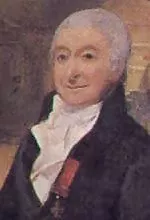
Jácome Ratton
Jacques, alias Jácome Ratton was a Franco-Portuguese businessman, who was a leading figure in the mainly foreign group of industrialists in 18th century Portugal. He published his Memoirs (Recordaçoens) in 1813 in exile in London, which remain a significant source on Portuguese economic life in the period.
His father was Jacques (in Portugal called Jácome) Ratton, Sr. (died Mâcon, 1779), the son of a Member of the Conseil du Roi (in effect a Public Prosecutor) in Mâcon of the same name and wife Jeanne Orsel, and soon after the birth of his eldest son by his marriage to Françoise Bellon (died Mâcon, 1794), emigrated to Portugal, where his brother-in-law Jacques Bellon was already established in Porto married to Marie Purat. Jácome, Jr., brought up by his grandparents, was educated in France before joining his parents at the age of fourteen in Portugal - a pattern typical of the French mercantile community, which he was to repeat with his own children. His Memoirs stress the importance of this - he is highly critical of the backwardness of the Portuguese mercantile classes, who he said hardly used double-entry bookkeeping and were generally unbusiness-like in their ways. In 1758 Jacome married Ana Isabel Clamous, daughter of the French Consul in Porto (again, a son would marry the daughter of another Consul), and in 1762, when France and Portugal were on opposite sides in the Seven Years' War, he became naturalized Portuguese. His father had moved to Lisbon and was in business, including a partnership with the brother-in-law in Oporto; after Jacome was established he retired to France. The 1755 Lisbon earthquake, vividly described in the Memoirs, caused great losses for the business - 300,000 cruzados according to the Memoirs.
Jacome was an inventive and successful businessman, whose enterprises included a dye-works, a textile mill in Tomar, a paper mill in Elvas, and factories making felt hats in Elvas and Lisbon, the building for which still exists. The Tomar textile mill was the first in Portugal to use modern machinery, and created what was until recently the main industry of the town. The hats were made under a monopoly, though he criticises these in his Memoirs, saying that businessmen should be rewarded with titles instead. He traded in cloth, cognac, Bohemian window-glass, and other products. He invested in sea-salt making at Alcochete, near his country estate, and was also responsible for introducing the eucalyptus to Portugal, as well as the Araucaria. His memoirs recount how he made designs for a type of water-pump new to Portugal from a Dutch print.
He married Ana Isabel Clamouse, daughter of Bernard Clamouse, from Languedoc, and Geneviève Hartsoeker, had four sons and four daughters. He died in Paris, on 3 July 1820.